


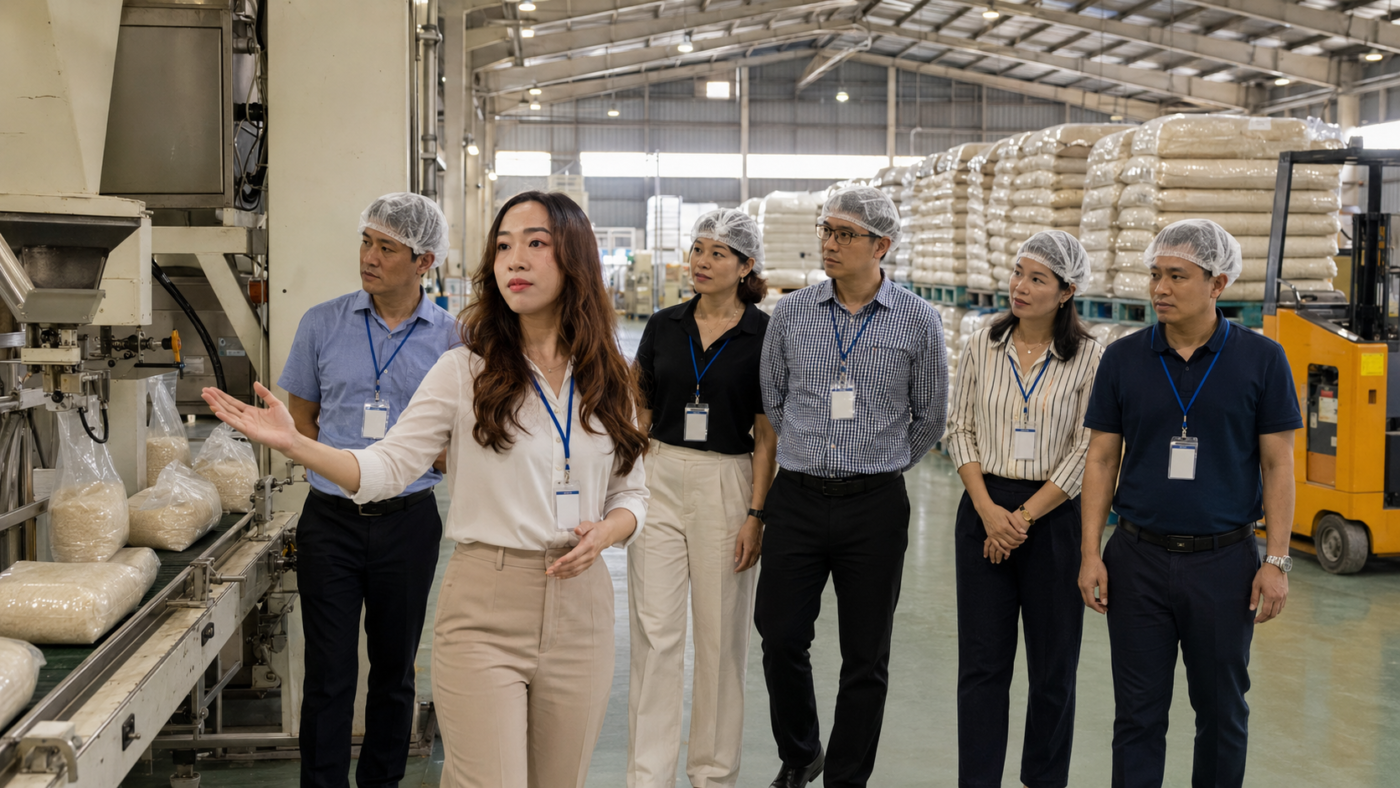
Vietnam is a major global rice exporter, and overseas buyers entering the Vietnam rice market for the first time — or seeking to improve their existing sourcing process — face a range of practical questions: how to find exporters, how to verify their credentials, what documentation is required, and how to manage quality from a distance. This guide covers the key aspects of sourcing rice from Vietnam, with a focus on what overseas buyers need to understand before placing their first order. Vietnam Biz Rep supports buyers throughout this process as a local representative and verification service, not as a rice exporter or trading company.
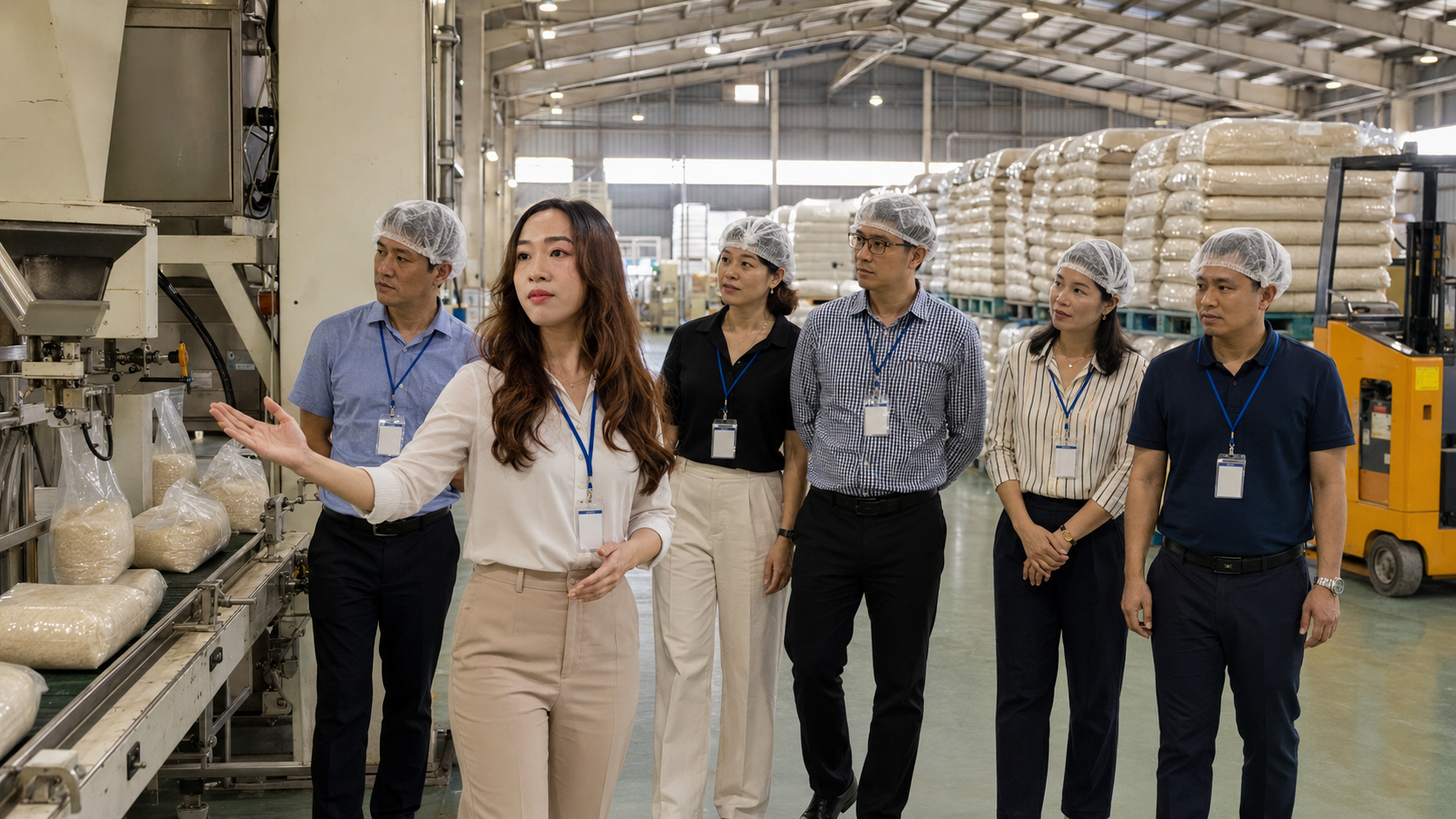
Overview of Rice Export from Vietnam
Vietnam ranks among the world’s top rice-exporting countries, with the bulk of export volume originating from the Mekong Delta region in the south of the country. The export supply chain involves rice mills, export trading companies, and government-affiliated enterprises, each operating under the licensing and regulatory framework managed by the Vietnamese Ministry of Agriculture and Rural Development and the Ministry of Industry and Trade.
Vietnam’s rice export calendar is tied to the country’s three annual harvest cycles in the Mekong Delta, which provide relatively consistent year-round supply availability. The Winter-Spring harvest (January–March) typically produces the highest-quality rice due to favorable temperature conditions. The Summer-Autumn and Autumn-Winter harvests follow, providing additional supply volume but potentially varying in quality.
Key export markets for Vietnam rice include the Philippines, China, Indonesia, Africa, and the Middle East. Buyers from these regions and others approach the Vietnam market for competitive pricing, product variety, and established export infrastructure.
Rice Varieties Available for Export from Vietnam
Vietnam exports a diverse range of rice varieties, each with distinct characteristics and target markets. Understanding which variety suits your buyers helps define your sourcing requirements from the outset.
White rice (5%, 10%, 25% broken) is the largest volume export category. Five percent broken targets higher-value markets; 25% broken serves volume-driven, price-sensitive markets primarily in Africa.
Jasmine rice (Hoa Lai) is a fragrant long-grain variety widely exported to markets in Asia, Europe, and the Middle East where fragrant rice is a consumer preference. It commands a premium over standard white rice.
ST25 rice is a premium fragrant variety from Soc Trang province with recognized international quality. It targets specialty retail and premium food service channels.
Glutinous rice (sticky rice) serves Asian markets with strong demand for this variety in traditional cuisine and food processing.
Parboiled rice and organic varieties are smaller-volume categories available from specialized producers for buyers with specific market requirements.
Export Documentation Requirements
Understanding the documentation required for Vietnam rice exports helps buyers plan their order timelines and confirm that their chosen supplier has the capability to produce compliant paperwork.
Commercial invoice and packing list are standard documents for all shipments. These must accurately reflect the product description, quantity, weight, and value as agreed in the commercial contract.
Bill of lading is issued by the shipping line and serves as the transport contract and title document. The buyer typically controls the original bill of lading and presents it to take delivery of the cargo.
Certificate of origin confirms that the rice was produced and exported from Vietnam. This document is required for customs purposes and may be necessary to claim preferential tariff rates under trade agreements.
Phytosanitary certificate is issued by Vietnamese plant protection authorities and certifies that the rice meets the plant health requirements of the importing country. Requirements vary by destination, and buyers should confirm their specific import country requirements before ordering.
Fumigation certificate is required by many importing countries to confirm that the rice has been treated to eliminate pest risk. Common fumigation treatments include methyl bromide and phosphine.
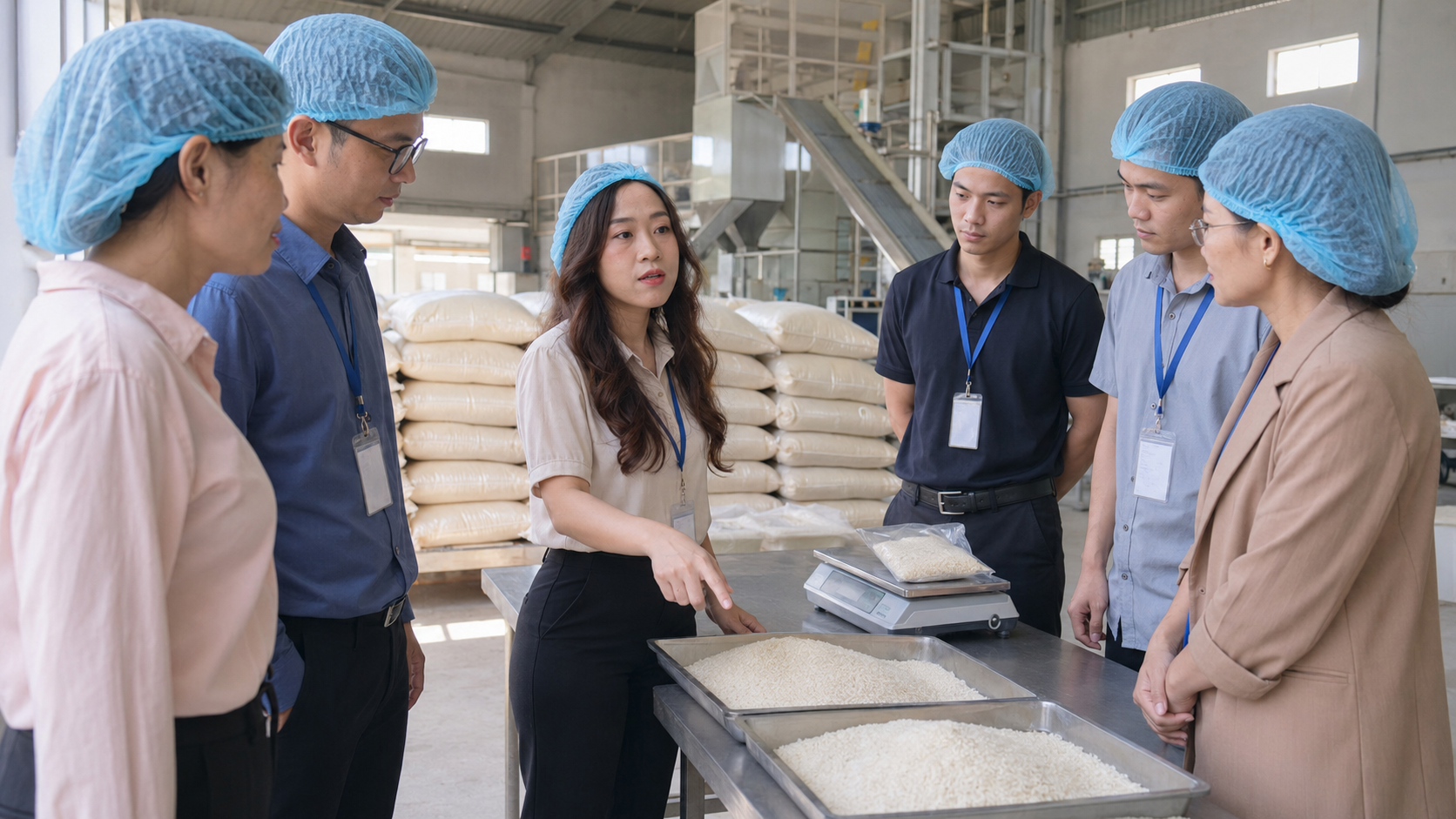
Common Challenges for Overseas Buyers
Buyers new to Vietnam rice sourcing commonly encounter the following challenges, which Vietnam Biz Rep’s local support services are designed to address.
Identifying the right type of supplier. The large number of registered rice exporters in Vietnam, combined with many unregistered brokers operating in the market, makes initial supplier identification time-consuming and uncertain for buyers working remotely.
Verifying supplier capacity and legitimacy. Online profiles and trade directories do not provide sufficient assurance about a supplier’s actual export capacity, license status, or quality standards. Local verification is necessary.
Managing quality from a distance. Without a local contact who can follow up on production, storage, and pre-shipment condition, buyers have limited visibility into the supply chain until the cargo arrives at the destination port — often too late to address problems.
Documentation errors. Incorrect or incomplete documentation causes customs delays and increased costs. Buyers who do not have local support to follow up with suppliers on documentation often discover errors only when the shipment is already in transit.
How Vietnam Biz Rep Supports Rice Export Buyers
Vietnam Biz Rep provides on-the-ground support for overseas buyers at every stage of the Vietnam rice sourcing process. The service operates as a local representative — not a rice exporter or trading company — helping buyers identify, verify, and coordinate with Vietnamese exporters.
Services include supplier identification and shortlisting, credential verification, facility visits, document coordination, pre-shipment inspection arrangement, and ongoing local communication during the production and export process. See our supplier verification and sourcing agent services for details.
Related: Vietnam rice suppliers overview | Vietnam business representative

Buyer Checklist: Sourcing Rice Export from Vietnam
- Define rice variety, grade, and specification precisely before approaching suppliers
- Confirm destination country import and phytosanitary requirements
- Identify and verify multiple supplier options before shortlisting
- Confirm supplier export license validity and business registration status
- Request and evaluate product samples against your specification
- Agree on payment terms and Incoterms before finalizing commercial contract
- Arrange pre-shipment inspection before cargo is loaded
- Confirm all documentation is complete and correct before the vessel departs
Frequently Asked Questions
What are the main rice export ports in Vietnam?
The main ports handling rice exports from Vietnam are Ho Chi Minh City (Cat Lai port), Can Tho, and My Tho in the Mekong Delta region. The port used for any specific shipment depends on the exporter’s location and the buyer’s destination. Your freight forwarder can advise on the most appropriate routing.
What is the standard lead time for Vietnam rice export?
Lead times vary by supplier and product availability. Buyers ordering from stock can typically expect two to four weeks from confirmed order to vessel loading. Orders requiring production or specific harvest-season sourcing may require additional time. Buyers are advised to build buffer time into their planning, particularly for first-time orders with a new supplier.
Does Vietnam Biz Rep handle rice export logistics?
Vietnam Biz Rep does not provide freight forwarding or shipping services. The team coordinates with suppliers and inspection companies on behalf of buyers, but logistics and customs clearance are handled by the buyer’s designated freight forwarder.
Are there seasonal price fluctuations for Vietnam rice exports?
Yes. Rice prices in Vietnam fluctuate based on harvest availability, domestic market conditions, and international demand. Prices typically vary between harvest seasons. Working with a local agent who monitors current market conditions helps buyers make more informed purchasing decisions.
Contact Vietnam Biz Rep for rice export sourcing and verification support.
We help overseas buyers navigate the Vietnam rice export market with local representation, supplier verification, and pre-shipment coordination.
Contact our team →
