


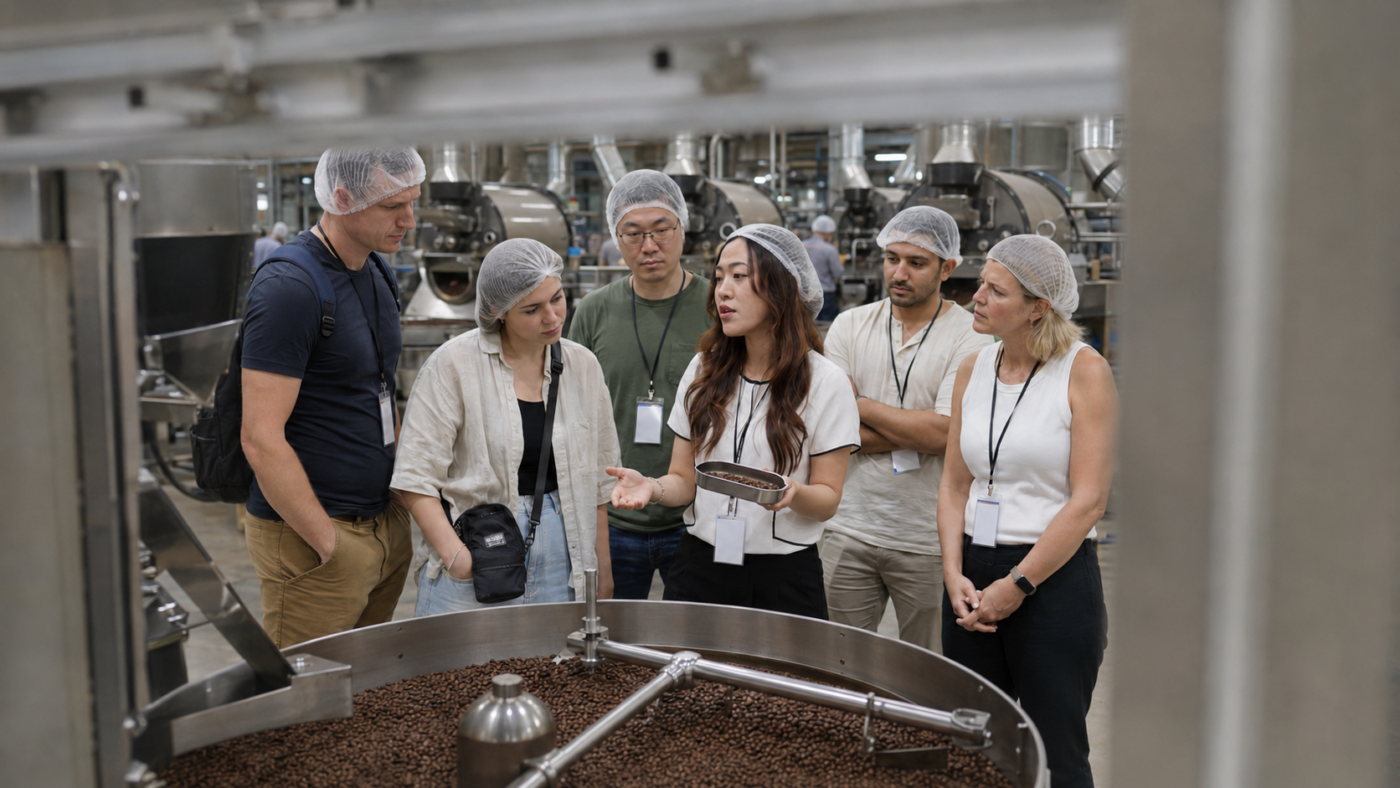
For overseas buyers seeking finished roasted coffee — whole bean or ground — from Vietnam, the sourcing process involves a different set of considerations than buying green beans. Vietnam roasted coffee suppliers include commercial roasters producing for export, specialty roasters offering single-origin Vietnamese roasts, and coffee brands that offer private-label roasting alongside their own product lines. This guide covers what buyers need to evaluate when sourcing roasted coffee from Vietnam, and how buyer-side support can help structure the process.
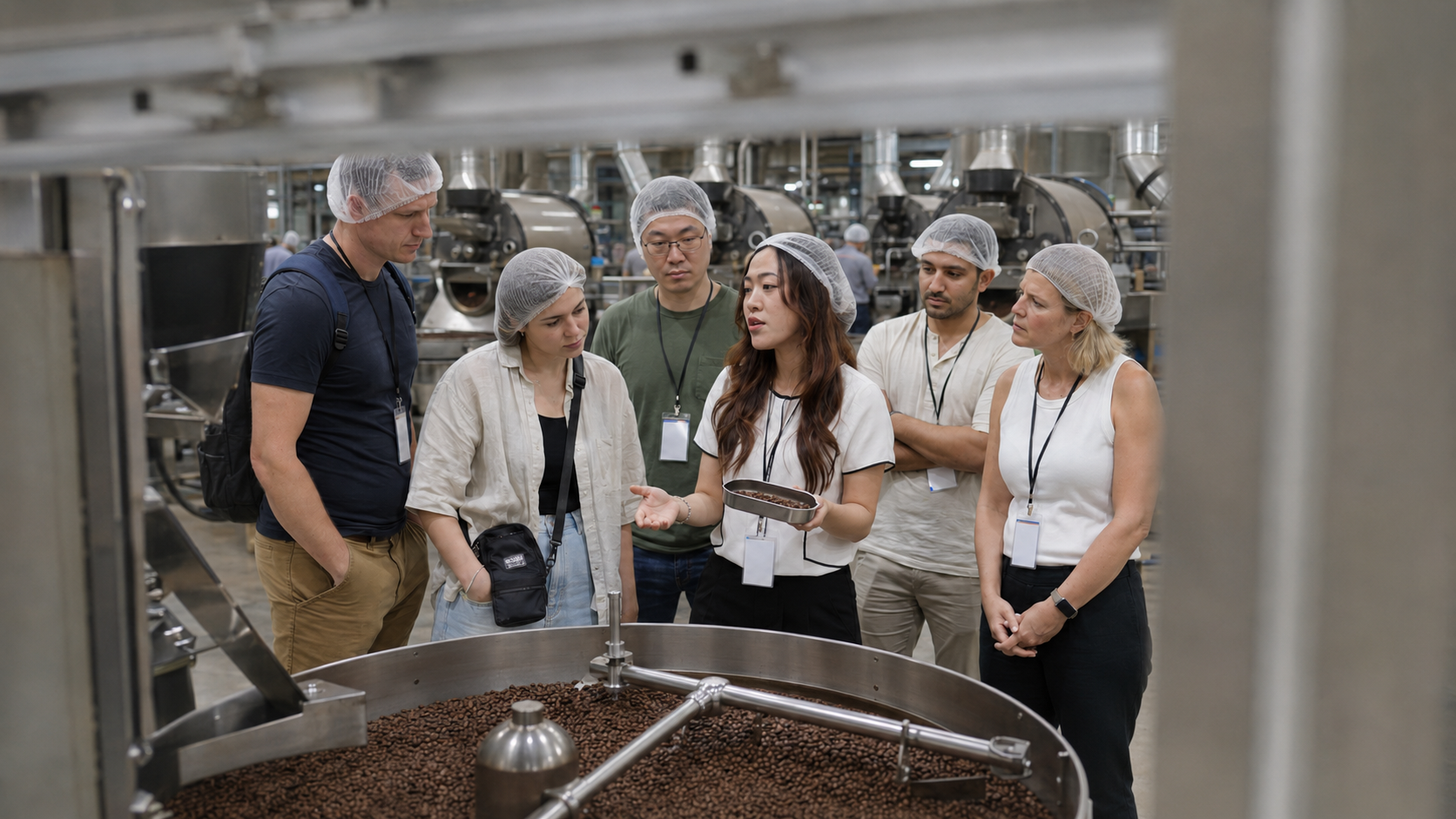
Types of Roasted Coffee Available from Vietnamese Suppliers
Vietnamese roasted coffee suppliers offer several product formats. Whole bean roasted coffee is exported for overseas brands that grind to order or sell whole bean. Pre-ground coffee — ground to a specified coarseness for filter, espresso, or drip — is available from suppliers with in-house grinding capability. Roasted blends combining Robusta and Arabica (or Robusta with other origins) are produced by commercial roasters for buyers who want a specific cup profile without single-origin sourcing. The coffee may be branded under the supplier’s own label or produced as a private-label product to the buyer’s specification.
Vietnamese Roasted Coffee Characteristics
Most Vietnamese roasted coffee is Robusta-dominant, reflecting the country’s production base. The roast profiles common in the Vietnamese domestic market tend toward medium-dark to dark, which suits the traditional Vietnamese brewing methods (phin filter, condensed milk preparation). However, export-oriented roasters increasingly offer a range of profiles — from lighter filter roasts for specialty markets to darker espresso profiles for commercial blending. Buyers should specify their target roast profile and request samples from multiple roast runs to assess consistency.
Key Evaluation Criteria for Roasted Coffee Suppliers in Vietnam
Roasting Equipment and Capacity
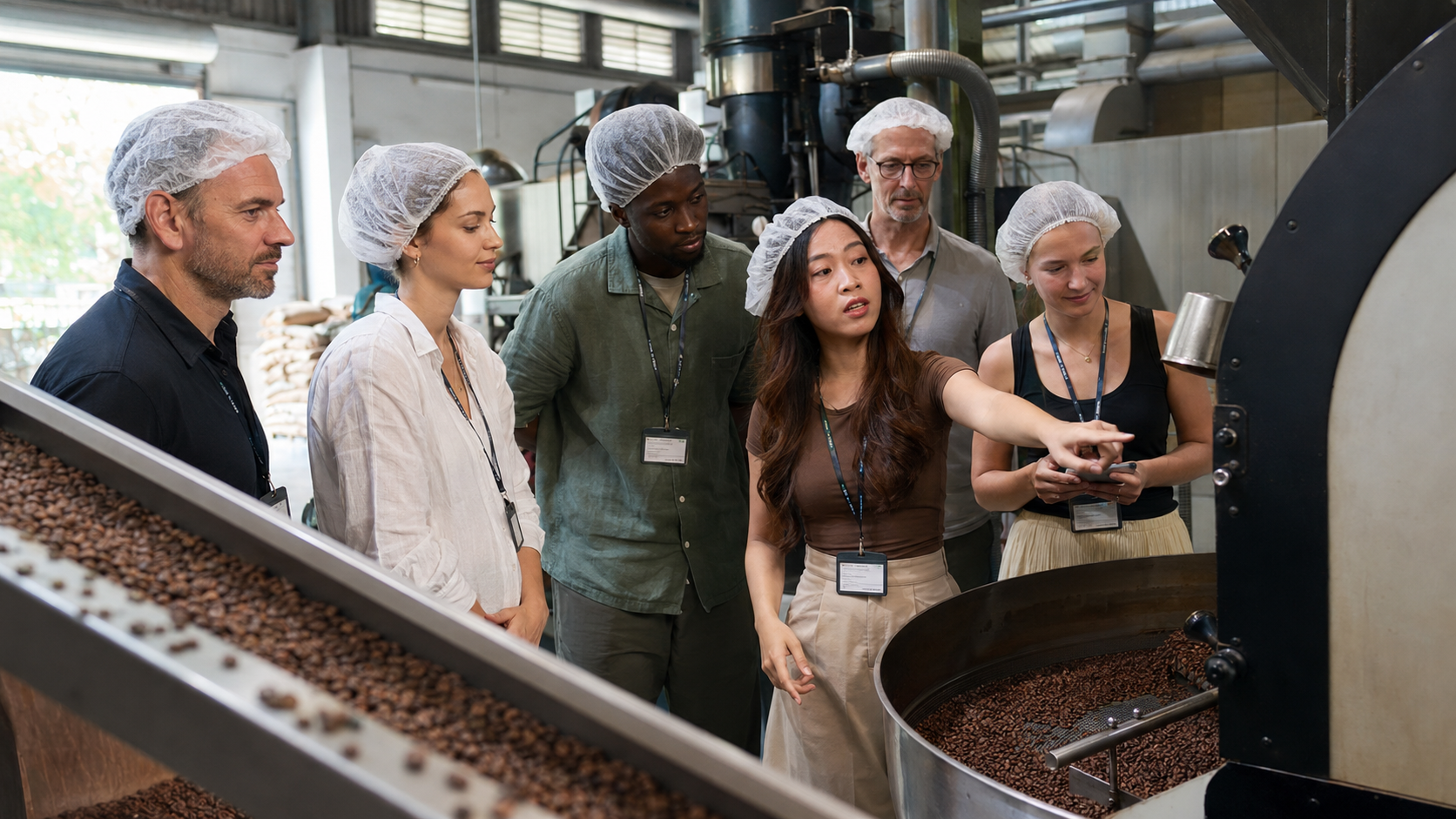
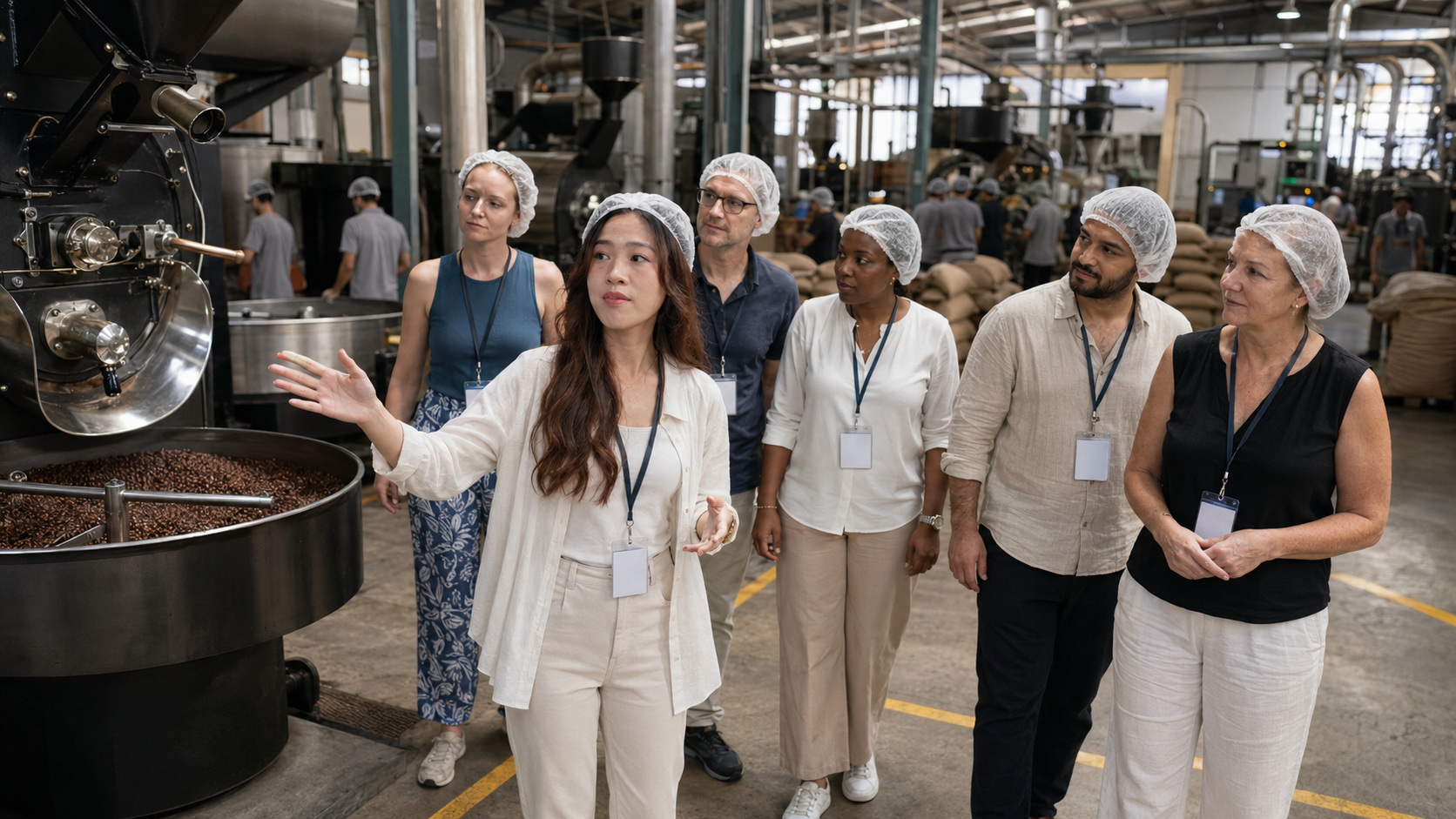
The quality and consistency of roasted coffee depends significantly on the roasting equipment and the operator’s skill in managing roast profiles. Buyers should assess the supplier’s roasting equipment type, batch size, and available roast logging or profiling technology during a facility visit. This is particularly important for buyers who need precise, repeatable roast profiles across large volume orders.
Shelf Life and Packaging
Roasted coffee has a shelf life that depends on packaging format, storage conditions, and whether the product is whole bean or ground. Buyers should confirm the supplier’s packaging capabilities — including nitrogen flushing, one-way valve bags, and hermetic sealing — and review the stated shelf life with supporting test data where available. Confirm whether the stated shelf life has been validated through accelerated shelf life testing or is based on internal standards only.
Food Safety Certification and Export Documentation
Roasted coffee suppliers exporting to regulated markets — EU, USA, Australia, Japan — need appropriate food safety certifications (HACCP, ISO 22000, or equivalent) and must comply with destination market labeling and import requirements. Buyers should verify that certifications are current and apply to the specific production line being used for their order, not just a portion of the supplier’s operations.
Sample Approval Process
Before placing a commercial roasted coffee order, buyers should establish a clear sample approval process: specifying the roast profile, reviewing a production sample from the actual production equipment (not a lab-scale or hand roast sample), and confirming that the commercial production will match the approved sample. This is a step where local buyer representation is particularly valuable — a local representative can document the sample collection and ensure it reflects actual production conditions.
How Vietnam Biz Rep Supports Roasted Coffee Sourcing
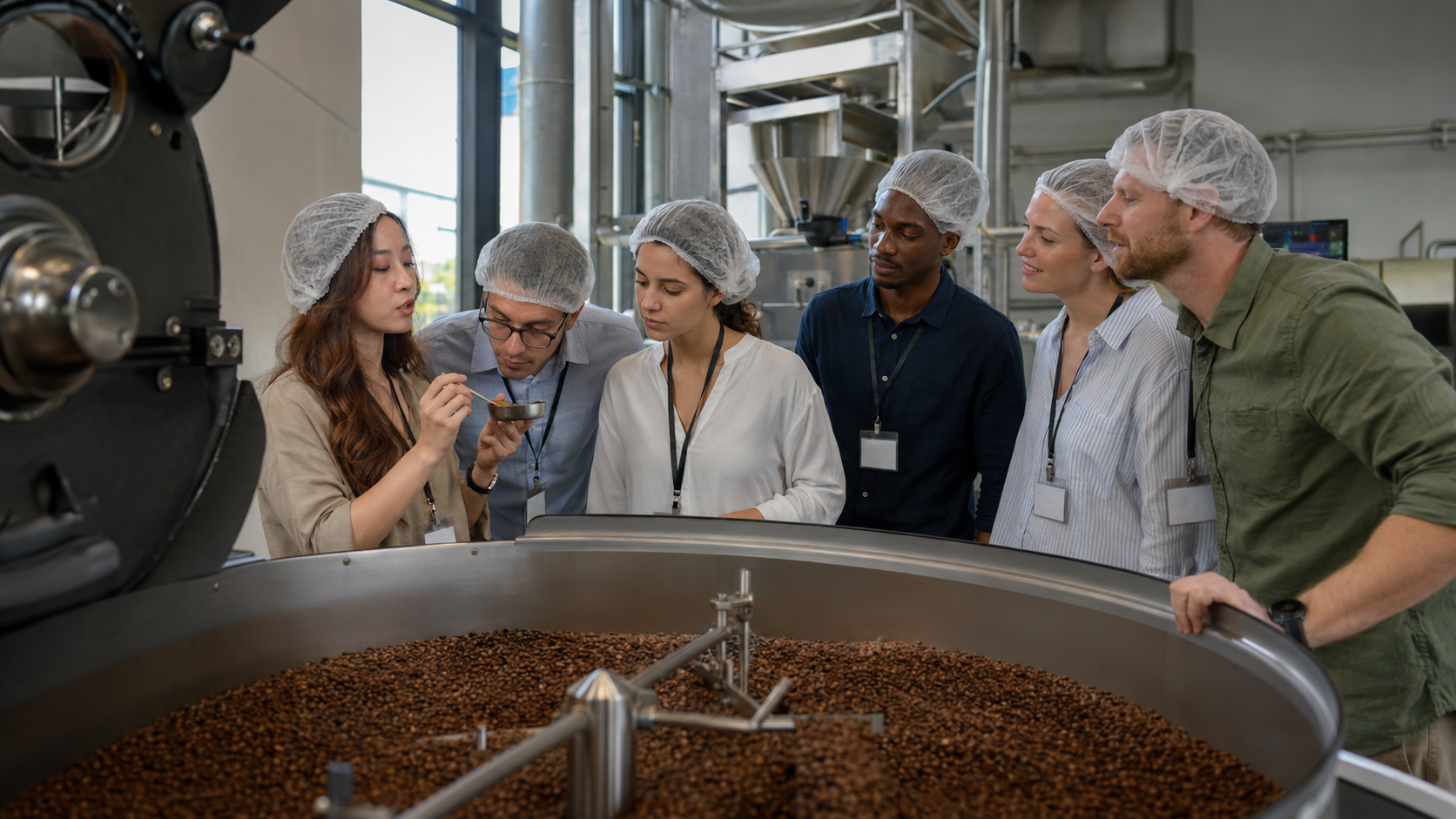
Vietnam Biz Rep is a buyer-side local representative. We do not sell roasted coffee or operate any roasting facility. We support overseas buyers in identifying verified Vietnamese roasted coffee suppliers, coordinating facility visits to assess roasting equipment and operations, managing the sample procurement process, and arranging pre-shipment quality verification before each commercial order.
For the broader coffee sourcing context in Vietnam, see our Vietnam coffee suppliers overview. For supplier verification support, see our Vietnam supplier verification and Vietnam factory audit services. For general Vietnam sourcing agent support, see our Vietnam sourcing agent page.
Managing Quality Across Multiple Roasted Coffee Orders from Vietnam
Roast profile consistency across multiple commercial orders from the same Vietnamese supplier is not automatic — it depends on the supplier’s equipment, green bean sourcing consistency, and their roastmaster’s attention to profile replication. Buyers who rely on a single approved sample as the ongoing quality reference without independent pre-shipment verification on subsequent orders often discover quality drift over time. A consistent approach to pre-shipment quality verification — comparing each production batch against the approved sample before loading — is the most practical safeguard. For buyers working with roasted coffee from Vietnamese suppliers on an ongoing basis, Vietnam Biz Rep can coordinate periodic facility review visits alongside per-shipment pre-shipment inspection, ensuring that any changes in the supplier’s green bean sourcing or roasting practices are identified before they affect a commercial order. For broader sourcing context, see our Vietnam coffee suppliers overview and our Vietnam sourcing agent page. For quality assurance support, see our Vietnam quality control and pre-shipment inspection Vietnam services. Supplier verification is covered at our Vietnam supplier verification page.
Export Documentation for Vietnamese Roasted Coffee
Roasted coffee exports from Vietnam are classified differently from green coffee for customs purposes, and buyers should confirm the correct HS classification for their destination market before importing. Food product imports — which roasted coffee is — may be subject to additional documentation requirements beyond those for green coffee exports: food safety certificates, ingredient declarations for ground or blended products, and country-specific import permits or notifications in some markets. Buyers importing roasted coffee from Vietnam into the European Union, the United States, Australia, Japan, or other regulated markets should confirm their import requirements with a licensed customs broker or regulatory specialist in the destination country before finalizing sourcing terms. Vietnam Biz Rep does not provide regulatory or customs advice, but can assist buyers in ensuring that the supplier provides complete and accurate documentation — commercial invoice, packing list, certificate of origin, health certificate if required, and food safety certification documentation — as part of the pre-shipment coordination process. For broader sourcing agent support across Vietnam, see our Vietnam sourcing agent page and our Vietnam business representative overview.
Roasted Coffee Import Requirements and Labeling Compliance
Buyers importing roasted coffee from Vietnam need to confirm the import classification and labeling requirements of their specific destination market. Roasted coffee is a processed food product and is subject to more detailed labeling requirements than green coffee in most regulated markets — including net weight, country of origin, ingredient declarations for blended or flavored products, and in some cases nutrition information. Buyers who plan to sell the imported roasted coffee under their own brand — whether produced to their specification by the Vietnamese supplier or re-labeled after import — have additional labeling compliance responsibilities that vary by market. These requirements should be understood and confirmed before the packaging artwork is finalized with the Vietnamese supplier, to avoid having to repackage or relabel product after import. Vietnam Biz Rep does not provide regulatory advice for destination markets, but can support buyers in communicating their labeling and documentation requirements to Vietnamese suppliers during the pre-production phase.
Frequently Asked Questions
Can Vietnamese roasted coffee suppliers produce to my specific roast profile?
Some can, particularly larger commercial roasters with profile logging capability and experienced roastmasters. The ability to reproduce a specific roast profile consistently across multiple production runs should be confirmed during the facility evaluation and sample approval process — not assumed based on the supplier’s marketing claims.
Is roasted coffee export from Vietnam common?
Yes, though green coffee represents the larger export volume. Roasted coffee export has grown as Vietnamese coffee brands have expanded their international presence and as overseas buyers have sought to import finished product rather than doing their own roasting. The supplier pool for roasted coffee export is smaller than for green coffee, making verification particularly important.
What packaging formats do Vietnamese roasted coffee exporters offer?
Common formats include 250g, 500g, and 1kg retail bags with one-way degassing valves; bulk packaging in 25kg or 50kg bags or sacks for food service or industrial buyers; and custom retail packaging for private-label orders. Buyers should confirm available packaging formats, minimum order quantities per format, and lead times for custom packaging production before finalizing sourcing terms.
How long does roasted coffee typically last after production?
Shelf life depends on packaging type, storage conditions, and whether the product is whole bean or ground. Buyers should request the supplier’s stated shelf life and the basis for it (testing data or internal standard), and confirm that the packaging used for the export order supports the claimed shelf life for the transit and distribution period anticipated.
Buyers who want to understand the full range of Vietnamese coffee processing operations — from raw bean processors through roasters and packers — can refer to our Vietnam coffee processing companies guide, which explains the different business types operating across the supply chain and how to evaluate each type for sourcing suitability.
Source Roasted Coffee from Vietnam
If you are evaluating Vietnamese roasted coffee suppliers for wholesale import or private-label production, Vietnam Biz Rep can provide buyer-side local support — from facility visits and sample coordination through pre-shipment quality verification. Contact us to discuss your roast profile requirements and intended order volumes.
Contact Vietnam Biz Rep for roasted coffee sourcing support →
