

Importing coffee from Vietnam can be a commercially sound decision for overseas buyers — the country is a major global producer with an established export supply chain. At the same time, like sourcing from any unfamiliar origin with a complex supply landscape, there are real risks that buyers should understand and manage proactively. This page provides an honest overview of the risks importing coffee from vietnam presents, without suggesting that Vietnam is uniquely problematic or that most suppliers operate dishonestly. The risks described are manageable with the right preparation, verification, and ongoing oversight.

Supplier Identity and Verification Risk
One of the most fundamental risks in any international sourcing relationship is dealing with a supplier who is not who they claim to be — or who cannot actually supply what they describe. In the Vietnamese coffee market, as in any commodity export sector, the supply chain includes legitimate exporters with established operations alongside entities whose actual capability, registration, or product access differs from what their marketing materials suggest.
The risk reduction approach is straightforward: verify before committing. Checking the supplier’s business registration, export license, actual facility, and operational history significantly reduces the risk of engaging with a fraudulent or misrepresenting entity. The Vietnam coffee supplier verification page explains the verification process in detail. Skipping verification in the interest of speed or perceived simplicity is one of the most common ways buyers encounter significant problems on the first or second order.
Specification and Quality Consistency Risk
A supplier who provides an excellent sample may not always deliver a bulk lot that matches the sample. Quality consistency risk — the gap between what was approved in sampling and what is shipped in bulk — is a common challenge in international coffee sourcing. Factors that can contribute to inconsistency include: the sample being unrepresentative of standard production; the supplier substituting a different lot for the approved product without disclosure; and process or storage variability between when the sample was taken and when the bulk lot is packed.
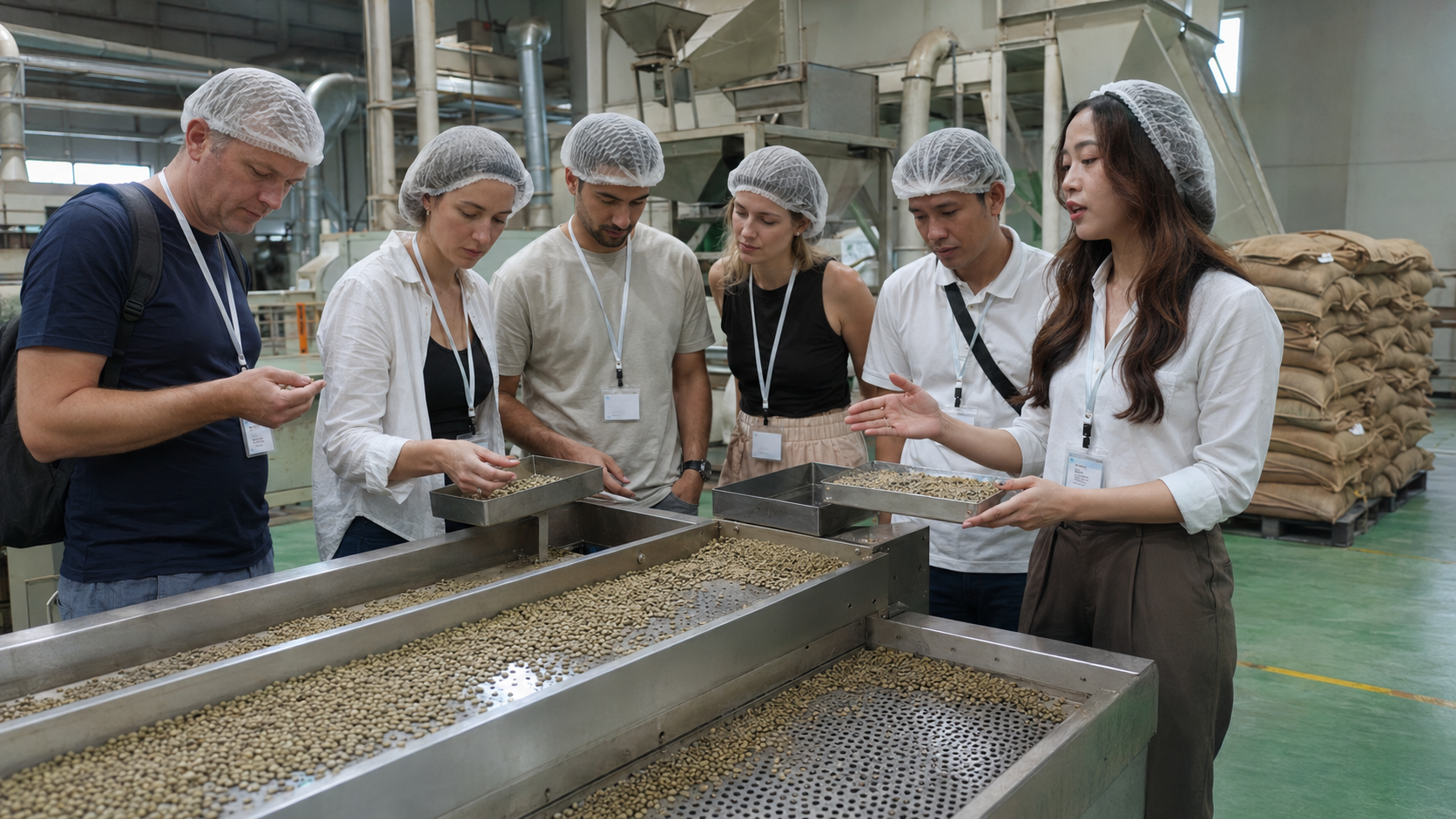
Managing this risk requires maintaining an approved sample as a reference standard and arranging independent pre-shipment inspection to compare the bulk lot against that reference before loading. A quality inspection and pre-shipment inspection conducted by Vietnam Biz Rep gives the buyer independent observations before the goods leave Vietnam — providing the best opportunity to identify and address any quality discrepancy while there is still practical recourse.
Packaging and Documentation Risk
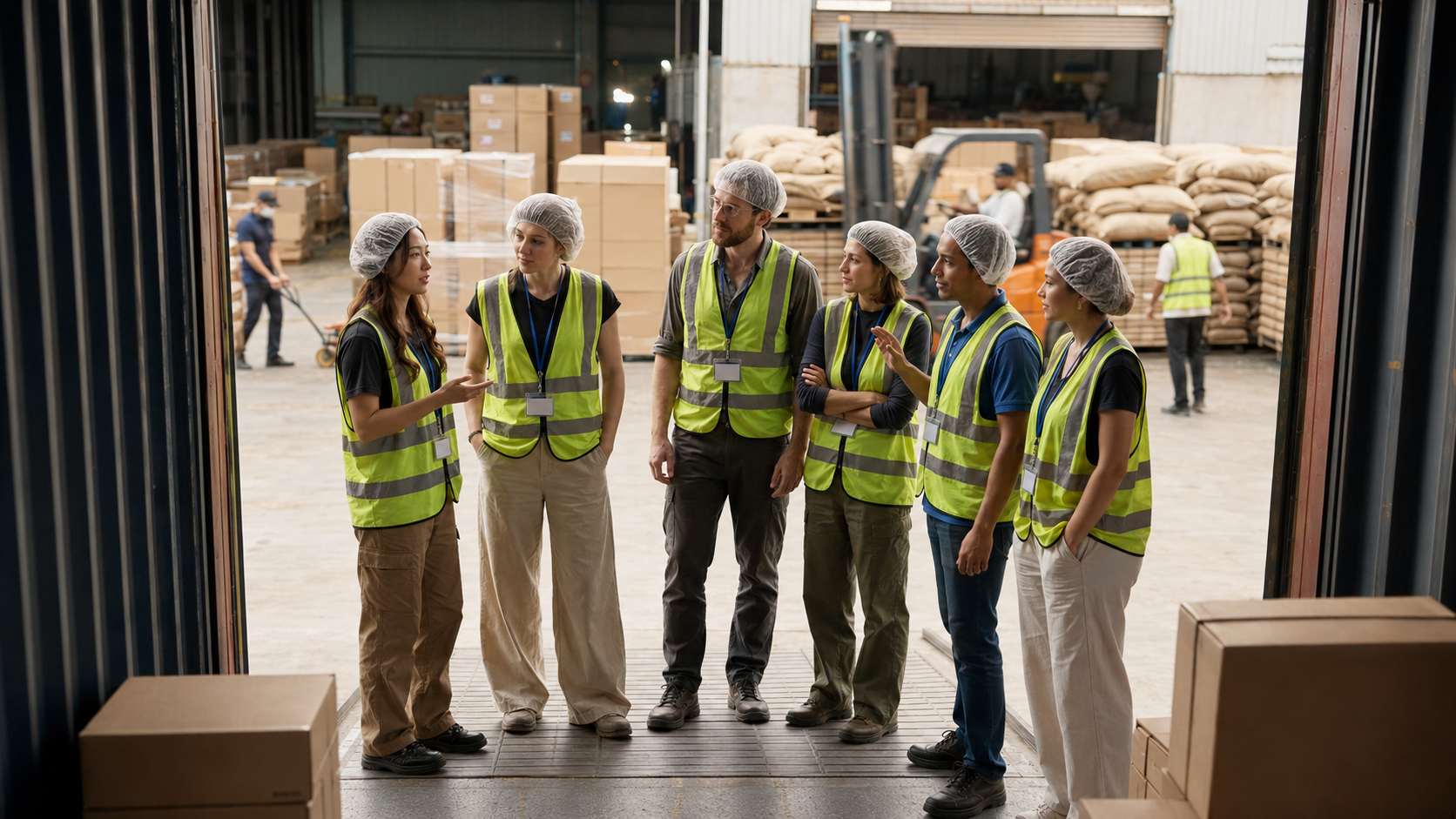
Packaging defects and documentation errors can create problems at the destination that are difficult and expensive to resolve. Common issues include: damaged or incorrectly sealed bags that allow moisture ingress during transit; missing or incorrect labelling that fails destination market compliance checks; and errors or inconsistencies in export documents that delay customs clearance.
The most effective mitigation is a packaging and documentation check conducted before the container is sealed — either as part of a pre-shipment inspection or as a standalone packaging review. Issues caught before loading can typically be corrected by the supplier at their facility. Issues discovered at the destination port create significantly more complex and costly resolution scenarios. For an overview of what documentation accompanies a Vietnamese coffee shipment, the Vietnam coffee export documents guide is a useful reference.
Payment and Financial Risk
Payment risk in international coffee sourcing relates to the timing of payment relative to the receipt and verification of goods. Buyers who pay a large advance deposit before any verification is complete — or before samples have been evaluated and a supplier’s legitimacy confirmed — are exposed to significant financial risk. Scams involving advance payment followed by non-delivery or delivery of the wrong product do occur in international trade, and the Vietnamese coffee sector is not immune.
Risk mitigation approaches include: paying deposits only after initial verification is complete; using payment terms that tie the balance to confirmation of shipment documents (such as documentary collections or letters of credit for larger orders); and arranging independent inspection before authorising payment. Buyers are advised to consult their bank or trade finance advisor about appropriate payment structures for their specific transaction size and risk profile.
Vietnam Biz Rep does not provide financial or legal advice. However, the verification, inspection, and local representation services Vietnam Biz Rep provides can support buyers in structuring sourcing engagements that limit financial exposure — by confirming supplier legitimacy before payment and verifying shipment quality before authorising balance payments.
Shipment Coordination and Communication Risk
Managing a coffee import from Vietnam involves coordinating between the buyer’s location, the Vietnamese supplier, freight forwarders, shipping lines, customs brokers, and sometimes inspection agencies. Communication gaps — particularly around language and time zone differences — can lead to misaligned expectations about shipment readiness, documentation timing, and delivery schedules. A supplier who agrees verbally to a loading date but does not communicate delays promptly creates operational problems for the buyer’s downstream planning.
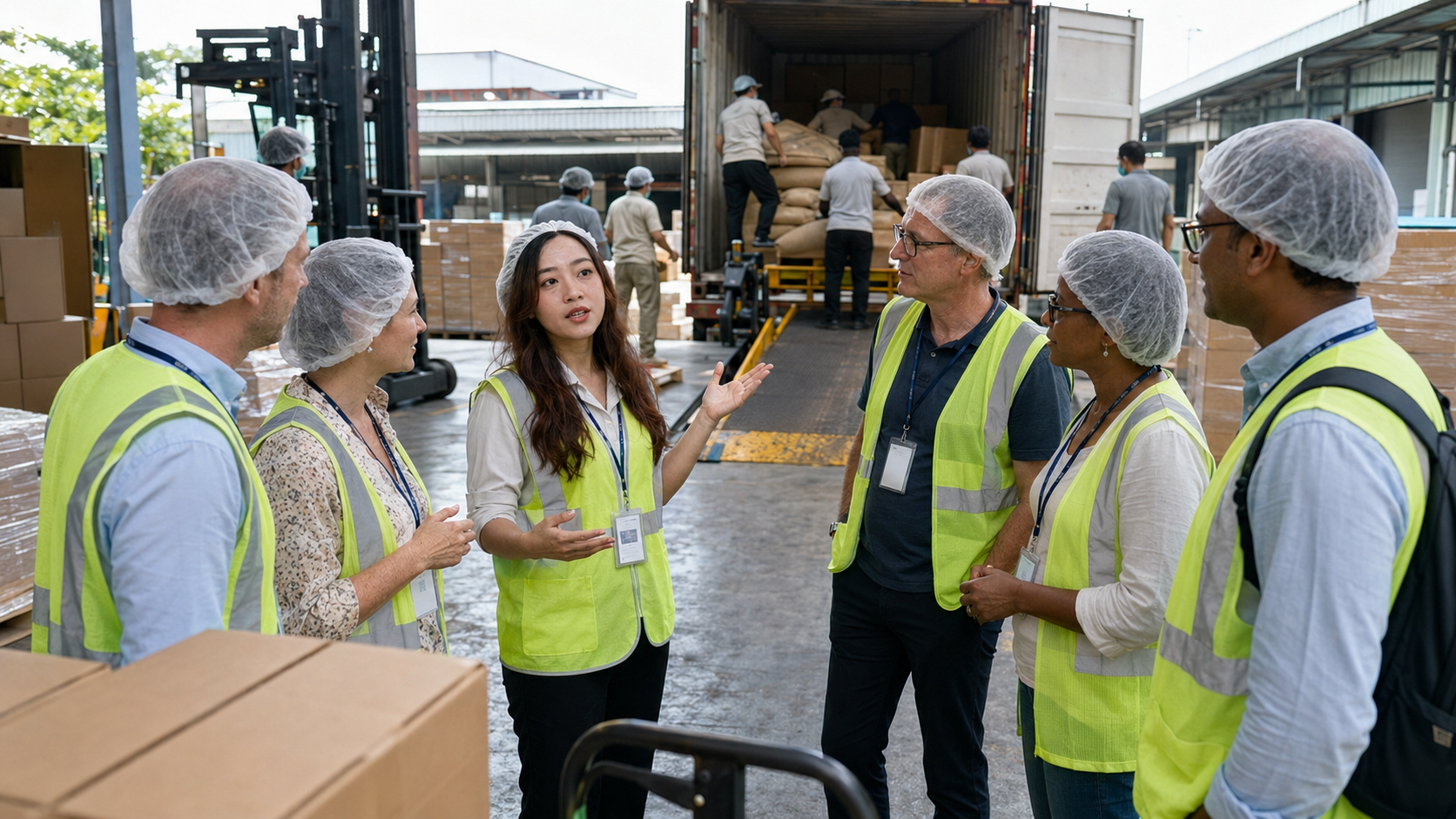
Local representation in Vietnam — either through a sourcing agent or a buyer representative — reduces this communication risk by providing a Vietnamese-speaking point of contact who can follow up with the supplier, confirm loading and documentation status, and relay accurate information to the buyer in English. For buyers managing their first shipment from Vietnam, this local presence is particularly valuable during the critical period between order confirmation and container departure. The Vietnam sourcing agent service covers this type of ongoing local representation. The Vietnam coffee suppliers overview and supplier verification resources support the upstream risk management process. The coffee sourcing agent in Vietnam page explains the full scope of local representation services available.
Compliance and Regulatory Risk
Coffee imports are subject to regulatory requirements at the destination market that vary by jurisdiction and evolve over time. These may include phytosanitary certificate requirements for green beans, food safety testing requirements for processed products, country-of-origin labelling obligations, and — increasingly for buyers in certain markets — supply chain due diligence requirements related to deforestation and sustainability.
Buyers who are not familiar with the import requirements of their destination market face the risk of shipment delays, additional testing costs, or refusal of entry if the required certificates, labelling, or documentation are not in order. The most effective mitigation is to understand destination market requirements in advance and communicate them clearly to the supplier as part of the purchase specification. Buyers should consult their customs broker, import agent, or legal advisor for current requirements applicable to their specific product and market.
Vietnam Biz Rep can assist buyers in reviewing export documentation at the supplier end — checking that the documents the supplier is preparing are consistent with the purchase order and the general requirements the buyer has communicated. For detailed guidance on Vietnamese coffee export documents, the Vietnam coffee export documents page covers the main document types. For traceability documentation in the context of regulatory due diligence, the Vietnam coffee traceability requirements page is relevant. The supplier verification service helps confirm the supplier’s legal standing and export registration as part of the overall risk management approach.
Frequently Asked Questions
Are most Vietnamese coffee exporters reliable?
The majority of businesses operating in the Vietnamese coffee export sector are legitimate entities with genuine export operations. The risks described in this page are real but not ubiquitous — they represent a subset of sourcing scenarios rather than a general characterisation of all Vietnamese suppliers. Structured verification, sample evaluation, and inspection reduce exposure to the smaller proportion of situations where problems arise.
What is the biggest single risk when importing coffee from Vietnam for the first time?
For most buyers, the highest-risk scenario is paying a significant advance to an unverified supplier before any independent verification has taken place. Combining advance payment with a lack of inspection creates maximum financial exposure. Mitigating this specific risk — by verifying the supplier before payment and inspecting goods before authorising the balance — significantly reduces the overall risk profile of the first transaction.
Can Vietnam Biz Rep help reduce these risks?
Yes. Vietnam Biz Rep provides local buyer representation services — supplier verification, facility visits, sample coordination, quality inspection, pre-shipment inspection, and ongoing supplier communication — that address the main categories of sourcing risk described on this page. The service does not eliminate risk entirely, but it provides the independent, on-the-ground oversight that overseas buyers cannot replicate remotely.
What should I do if a bulk order arrives with quality below the approved sample?
First, document the issue thoroughly — photographs, detailed description of the discrepancy, weight of affected goods, and any relevant laboratory results if applicable. Compare against the retained approved sample and the pre-shipment inspection report if one was conducted. Then contact the supplier in writing, citing the specific discrepancy and the reference to the approved sample. The retained sample, inspection report, and written approval communication are the key evidence inputs for any commercial dispute or claim against the supplier.
To discuss risk management approaches for your coffee sourcing from Vietnam, contact Vietnam Biz Rep with details about your sourcing situation, the specific product type you are purchasing, and the areas where you would like local support.
