
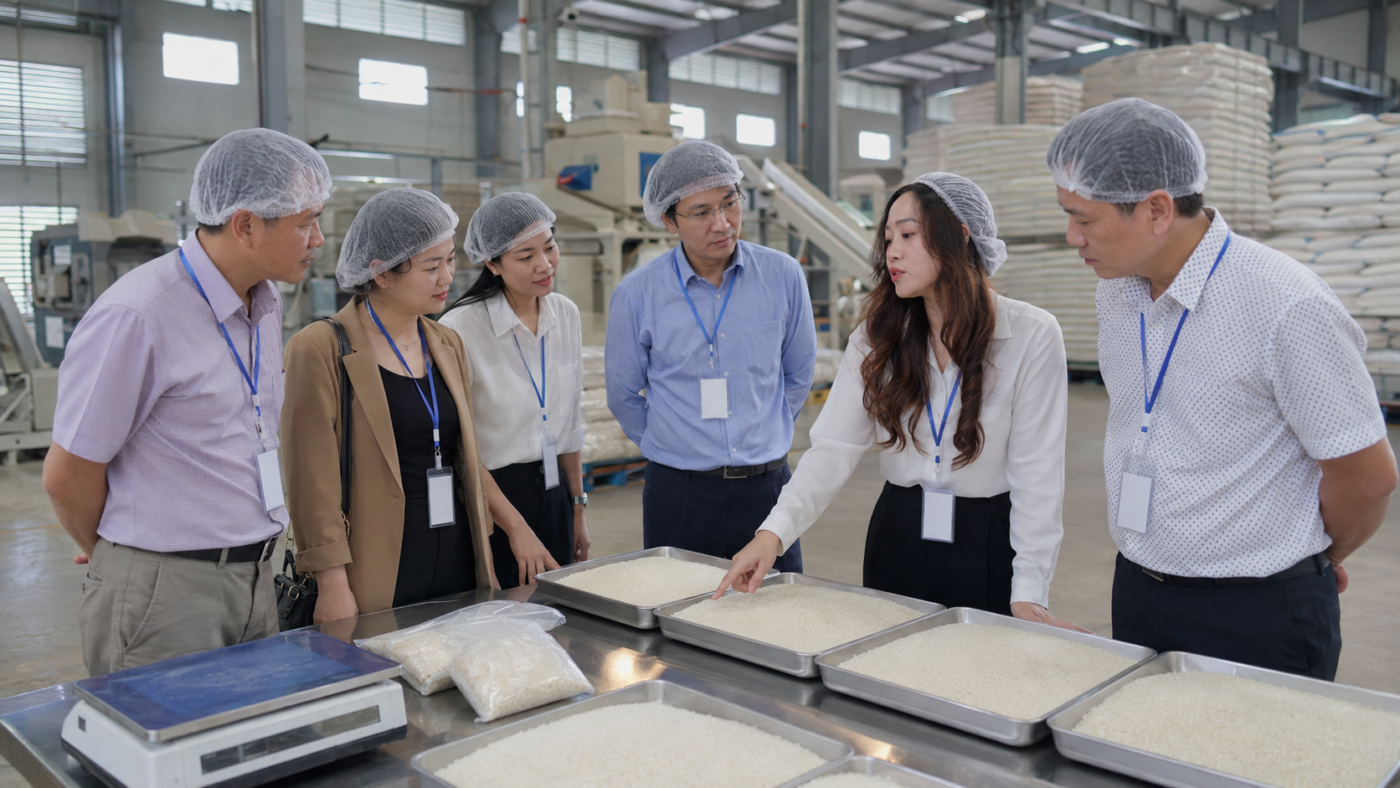
Finding a legitimate rice exporter in Vietnam is the first challenge for any overseas buyer entering the market. Vietnam has hundreds of registered rice export companies, ranging from large state-affiliated mills to smaller private trading companies. The variation in scale, reliability, and export experience is significant. Overseas buyers who approach exporters without verification support frequently encounter issues with product quality, documentation accuracy, and delivery consistency. Vietnam Biz Rep helps buyers navigate this landscape by providing local sourcing research, supplier verification, and on-the-ground coordination — without acting as a rice exporter or trading company itself.
Overview of Vietnam’s Rice Export Sector
Vietnam is one of the world’s major rice exporters, with the Mekong Delta region accounting for the majority of the country’s rice production and export volume. The export chain includes state-owned enterprises, large private mills with integrated processing and storage, mid-sized trading companies that source from multiple mills, and smaller brokers who facilitate transactions without owning production assets.
Vietnam exports a wide range of rice varieties. Jasmine rice and ST25 fragrant rice are among the premium varieties in demand from buyers seeking higher-quality product. White rice in 5% and 25% broken grades makes up the largest share of export volume, serving buyers in markets where price is the primary consideration. Glutinous rice, parboiled rice, and organic varieties round out the export portfolio.
Ho Chi Minh City and the Mekong Delta ports — particularly the ports of Can Tho and My Tho — handle the majority of rice export shipments. Buyers working with exporters in these regions need to understand that logistics, port congestion, and seasonal production cycles all affect availability and lead times.
Types of Vietnam Rice Exporters
Understanding the structure of Vietnam’s rice export supply chain helps buyers make more informed sourcing decisions.
Rice mills with direct export licenses are the most reliable source for consistent quality and competitive pricing. These companies own processing equipment, storage facilities, and export their own product. They generally require minimum orders at the full container load level and prefer buyers with consistent repeat business.
Export trading companies consolidate supply from multiple mills and offer more variety and flexibility on order size. They add a margin to the mill price and their quality consistency depends on which mill they source from at any given time. Trading companies are useful for buyers who need smaller volumes or multiple varieties in a single shipment.
Brokers and agents facilitate transactions without owning product or processing facilities. They can be useful for making introductions but add cost and reduce direct accountability in the supply chain. Buyers working with brokers should still verify the identity of the actual exporter behind any commercial transaction.
Key Risks When Sourcing Vietnam Rice Exporters
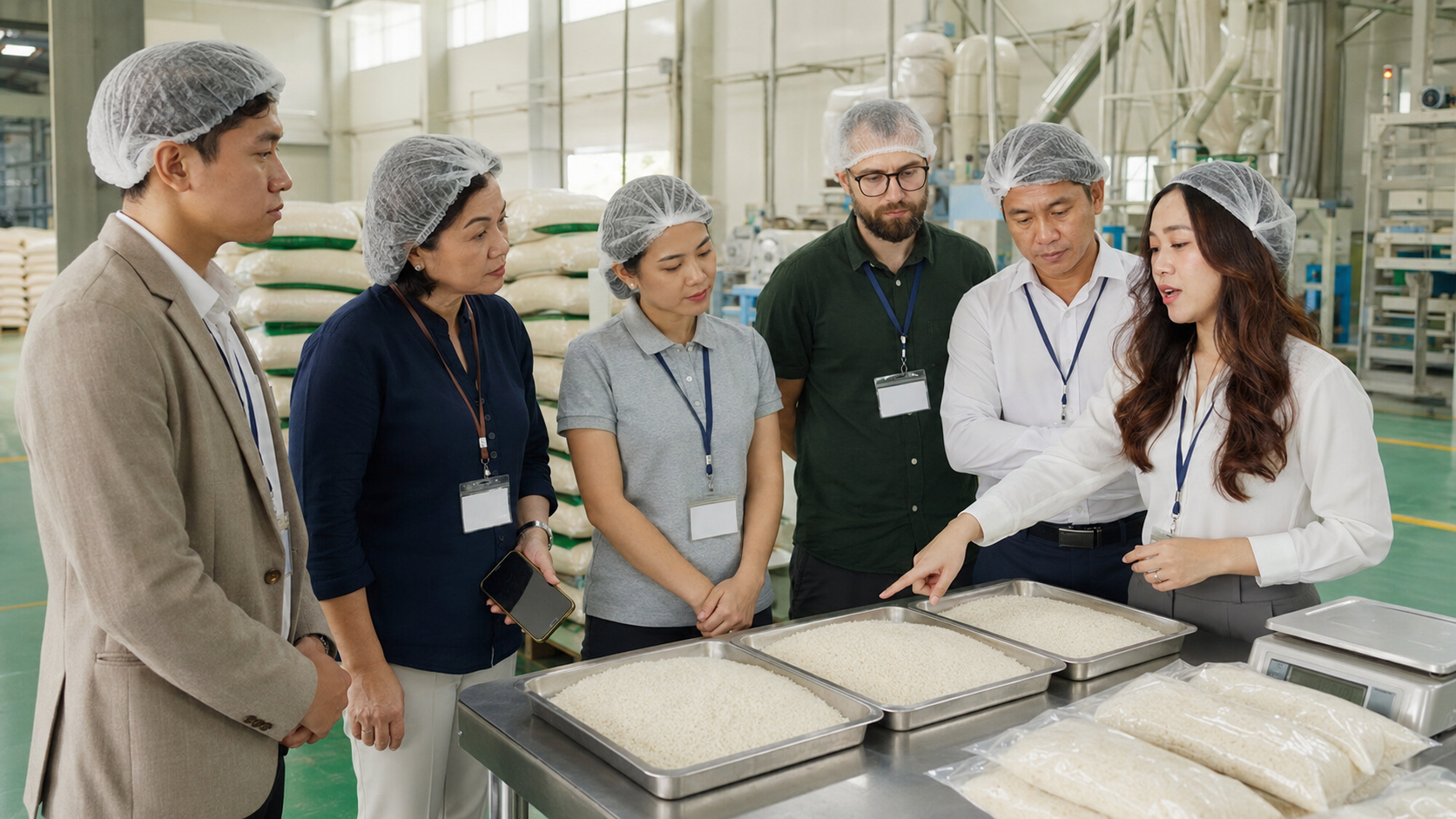
The risks in sourcing from Vietnam rice exporters without local verification are well-documented among buyers who have experienced them firsthand. The most significant include: suppliers who overstate their direct mill capacity when they are actually brokers; quality claims in samples that do not match bulk shipments; export documentation prepared incorrectly for the destination market; and communication that goes dark after payment is received.
A buyer’s ability to investigate or follow up on these issues from abroad is limited. Without a local sourcing agent in Vietnam, buyers have no practical way to visit facilities, inspect stock, or apply pressure when a supplier fails to deliver as agreed.
Other risks include seasonal price volatility — rice prices fluctuate significantly by harvest season — and port delays that affect delivery timelines. Buyers who do not account for these variables in their planning often face supply chain disruptions that could have been anticipated with better local knowledge.
How to Source Vietnam Rice Exporters Safely
Safe sourcing of Vietnam rice exporters involves several steps that many buyers skip when they are under time or budget pressure. Taking these steps seriously reduces the risk of costly errors.
Step 1 — Identify and shortlist. Use multiple sources to build a list of potential exporters: trade directories, industry associations, referrals, and local sourcing agents. Do not rely on a single source or the first exporter who responds to an inquiry.
Step 2 — Verify credentials. Check business registration status, export license validity, and operational history. A local representative can do this efficiently with access to Vietnamese business registration databases and direct communication with the supplier.
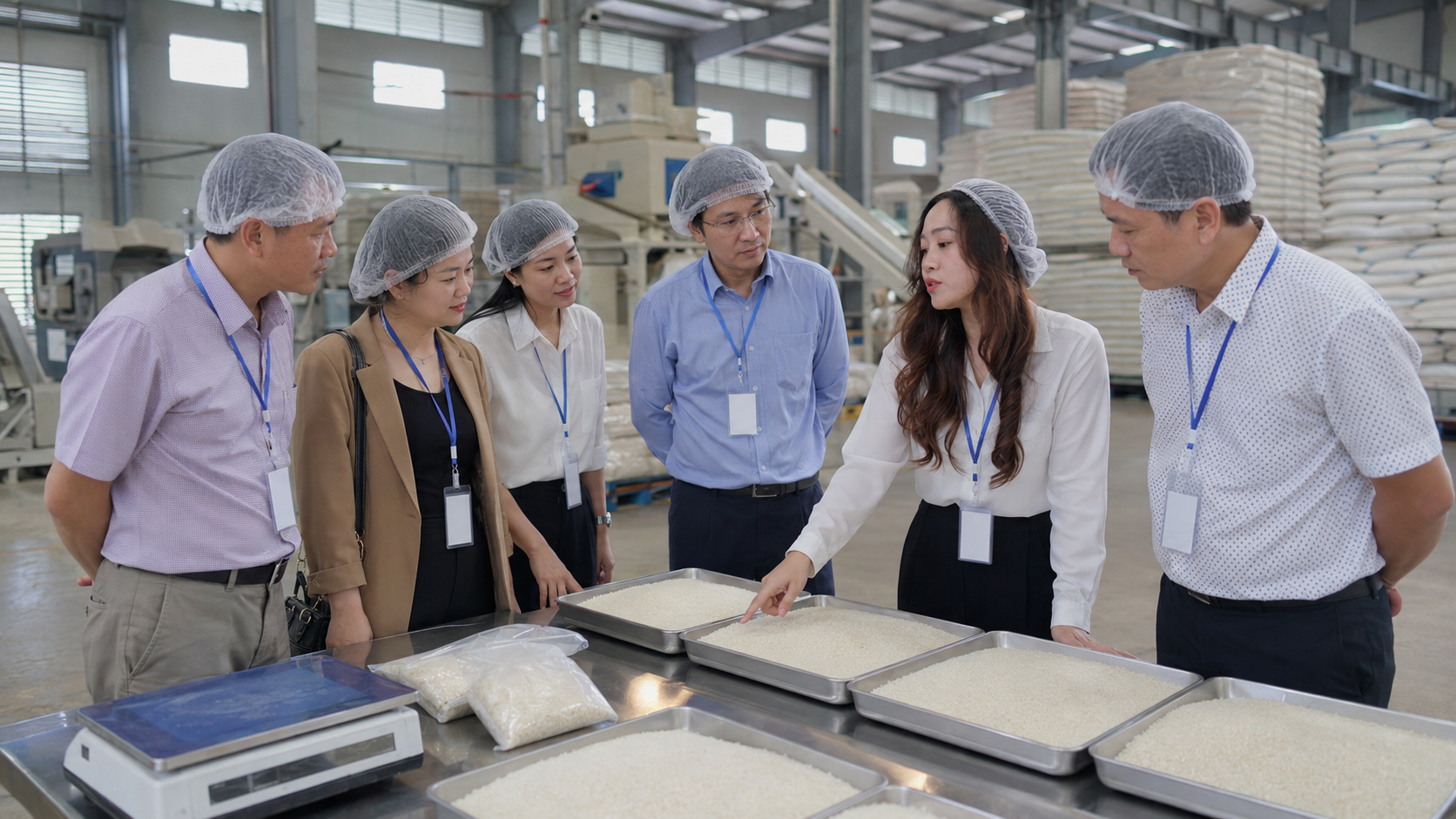
Step 3 — Request and evaluate samples. Evaluate product samples against your specification before committing to an order. Confirm that the sample represents typical bulk production, not a specially prepared showcase batch.
Step 4 — Arrange pre-shipment inspection. Before cargo is loaded, arrange a third-party inspection to verify weight, moisture content, grade, and packaging compliance. This is one of the most effective tools for ensuring what you ordered is what gets shipped.
Step 5 — Confirm documentation requirements. Work with the exporter and your local representative to ensure all required documents are correct before the vessel departs. Incorrect documentation causes expensive customs delays.
Vietnam Biz Rep supports buyers through all of these steps. Learn more: Vietnam rice suppliers | supplier verification in Vietnam
Buyer Checklist: Evaluating Vietnam Rice Exporters
- Is the exporter registered as a business in Vietnam? Check business registration number and verify it is current and active.
- Does the exporter hold a valid rice export license? Vietnam rice exporters must be licensed. Confirm the license is current and covers the volumes you require.
- Is the exporter a direct mill or a trading company? Understand who actually processes the rice you are buying. This affects accountability and quality consistency.
- Does the exporter have experience with your destination market? Some markets have specific requirements (fumigation, phytosanitary certificates, labeling). Confirm the exporter understands these requirements.
- Can the exporter provide references from previous buyers? Verifiable references from other overseas buyers provide additional assurance beyond documentation checks.
- Is a pre-shipment inspection available? Confirm the exporter will allow and cooperate with a third-party pre-shipment inspection.
Frequently Asked Questions
Does Vietnam Biz Rep export rice directly?
No. Vietnam Biz Rep provides sourcing research, supplier verification, and local coordination services. It does not sell rice, hold stock, or act as a trading intermediary between buyers and suppliers.
How many rice exporters are registered in Vietnam?
Vietnam has several hundred registered rice export enterprises, with the number varying by year as new licenses are issued and others are suspended or revoked. Buyers should verify the current license status of any exporter before proceeding with an order.
What is the minimum order quantity for Vietnam rice exports?
Minimum order quantities vary significantly by supplier type. Direct rice mills typically require at least one full container load (FCL, approximately 20–25 metric tons for a 20ft container). Trading companies may offer more flexible minimums for smaller buyers.
How can I verify that a Vietnam rice exporter is legitimate?
Verification involves checking business registration, confirming export license status, reviewing export history, and if possible, arranging a physical visit to the supplier’s facility. A local representative with access to Vietnamese business databases and Vietnamese-language communication capability can conduct this verification more efficiently than a buyer working remotely.
What documents should a Vietnam rice exporter provide?
Standard export documentation includes a commercial invoice, packing list, bill of lading, certificate of origin, phytosanitary certificate, and fumigation certificate. Depending on the destination country, additional documents may be required. Your freight forwarder can advise on destination-specific requirements.
Contact Vietnam Biz Rep for rice exporter sourcing and verification support.
We help overseas buyers identify, verify, and coordinate with Vietnam rice exporters — locally, in Vietnamese, on the ground.
Contact our team →
