

For overseas buyers importing rice from Vietnam, understanding the required export documentation is essential — not just for customs clearance at destination, but also for verifying that the supplier is operating legally and transparently. This guide covers the key Vietnam rice export documents that buyers should expect, how to verify their authenticity, and how Vietnam Biz Rep supports buyers in reviewing and coordinating export paperwork from within Vietnam.

Why Buyers Need to Understand Rice Export Documents
Many first-time importers focus on price and product specifications — and overlook the documentation side of the transaction until problems arise at the destination port. Incomplete, inaccurate, or fraudulent export documents can cause shipments to be held, rejected, or quarantined at destination. They can also indicate supplier compliance problems that a buyer should have identified before committing to the contract.
Understanding what documents are required, who issues them, and what they should contain gives buyers a meaningful check on supplier credibility. A supplier unable or unwilling to provide correct documentation is a significant warning sign — regardless of how competitive their price may be.
Key Vietnam Rice Export Documents
1. Commercial Invoice
The commercial invoice is issued by the Vietnamese supplier and serves as the primary contract document for the transaction. It must accurately reflect the agreed product, quantity, unit price, total value, payment terms, and Incoterms. Buyers should verify that the invoice matches the purchase order and that the supplier’s company name, address, and bank details are consistent with verified business registration records.
2. Packing List
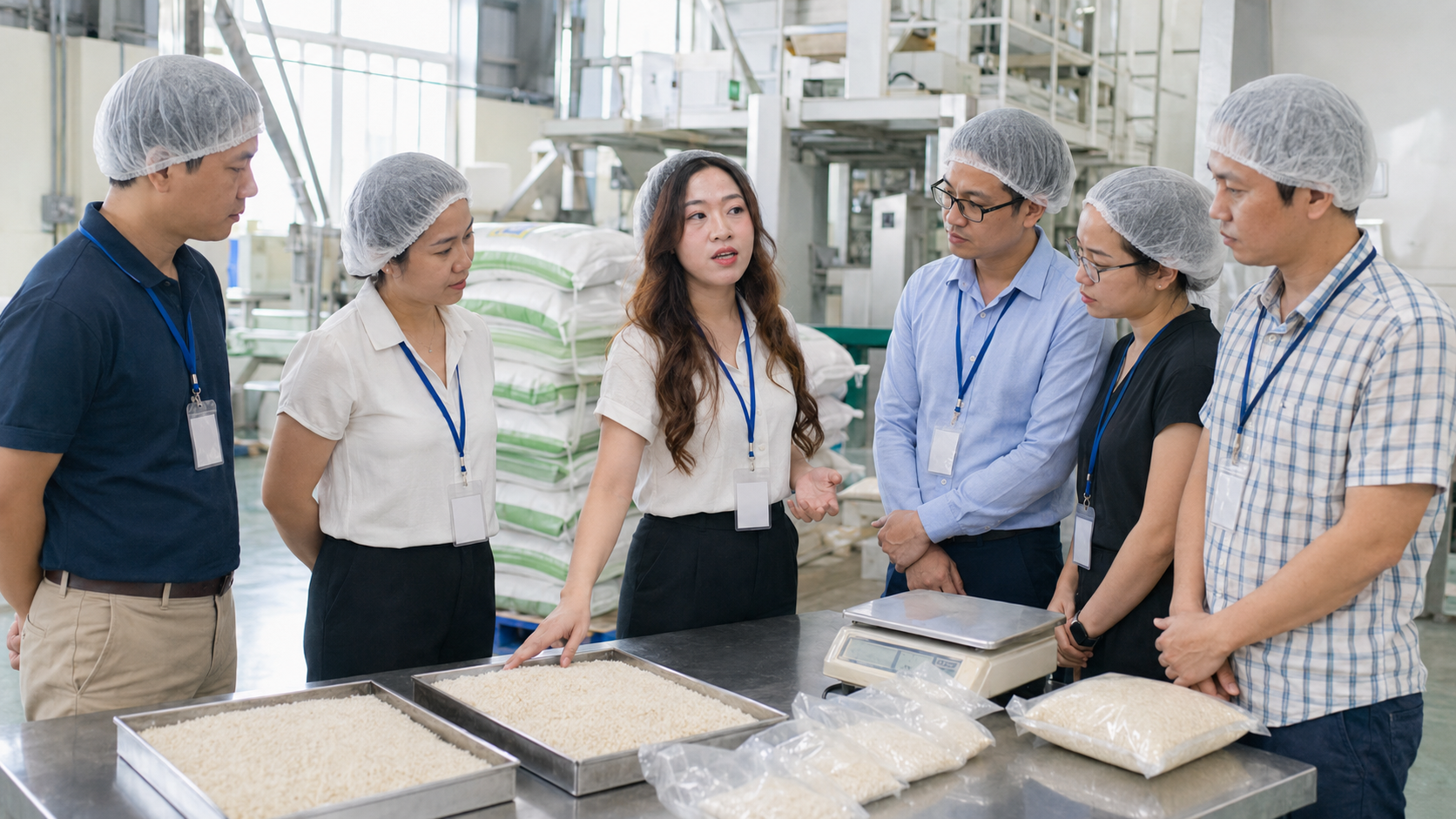
The packing list details the physical packaging of the shipment — number of bags or containers, net and gross weight per unit, and total weight. For rice exports, this document is cross-referenced during pre-shipment inspection to confirm that the physical shipment matches the declared figures. Discrepancies between the packing list and the actual shipment are a common source of customs delays.
3. Certificate of Origin (C/O)
The Certificate of Origin confirms that the rice was produced in Vietnam. This document is issued by VCCI (Vietnam Chamber of Commerce and Industry) or relevant government bodies. For buyers importing into countries that have free trade agreements with Vietnam — such as ASEAN members, the EU under EVFTA, or partner countries under RCEP — a valid C/O is required to claim preferential tariff rates. The form type (Form D, Form EUR.1, etc.) depends on the destination country.
4. Phytosanitary Certificate
Issued by Vietnam’s Plant Protection Department (PPD) under the Ministry of Agriculture and Rural Development, the phytosanitary certificate confirms that the rice has been inspected and found free from specified pests and plant diseases. This document is mandatory for rice imports into virtually all countries and must meet the destination market’s specific phytosanitary requirements, which vary between importing countries.
5. Quality and Weight Certificate
Often issued by VINACONTROL or another accredited inspection body, this certificate documents the rice grade, moisture content, broken grain percentage, and other key quality parameters for the specific shipment lot. It is distinct from a general product specification sheet and is tied to a specific lot and inspection date. This certificate supports the quality claims made in the commercial invoice.
6. Bill of Lading (B/L)
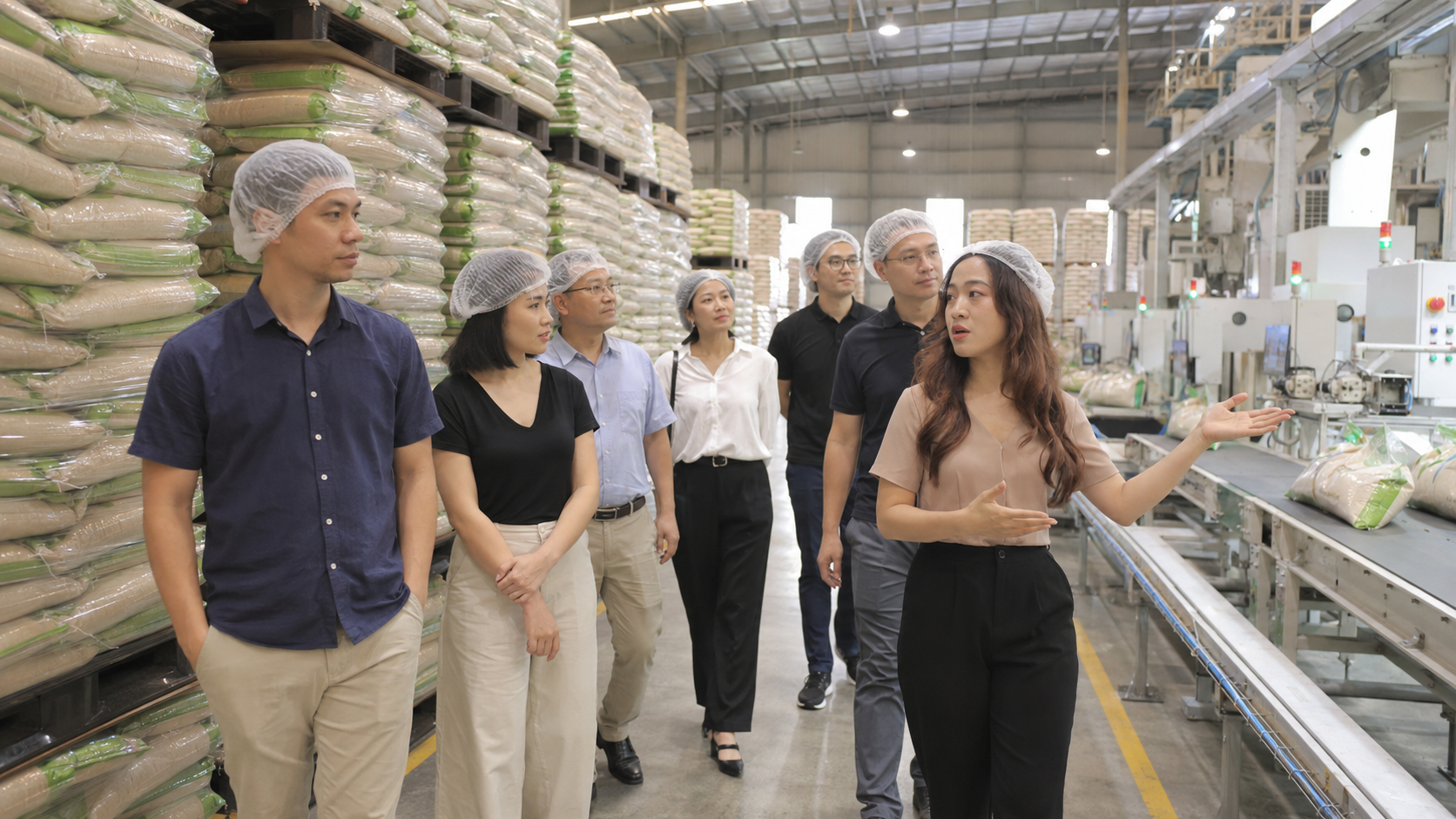
Issued by the shipping line or freight forwarder after the goods are loaded, the Bill of Lading is the title document for the shipment. It serves as the receipt for cargo, the contract of carriage, and (for negotiable B/Ls) the document of title. Buyers should review the B/L carefully to ensure it accurately reflects the goods loaded, the shipper and consignee details, and the freight terms.
7. Fumigation Certificate
Many importing countries require evidence that rice shipments have been fumigated to eliminate grain pests and insects before export. The fumigation certificate, issued by the fumigation service provider, specifies the fumigant used, dosage, duration, and the shipment lot it covers. Buyers importing into markets with strict biosecurity requirements — such as Australia — should ensure this document is included in the document set.
How Vietnam Biz Rep Supports Export Document Verification
Vietnam Biz Rep supports overseas buyers in reviewing draft export documents before the shipment is finalized — checking for consistency, completeness, and alignment with contract terms. As a local sourcing representative based in Vietnam, we can liaise directly with the supplier to request corrections or clarifications before documents are finalized and submitted to shipping and customs authorities.
We also coordinate with third-party inspection bodies for quality certificates as part of our Vietnam rice pre-shipment inspection service, and support broader supplier due diligence through our Vietnam rice supplier verification process. For more information on our representative services in Vietnam, see our Vietnam sourcing agent and Vietnam supplier verification pages. For general rice sourcing context, see our Vietnam rice suppliers and rice sourcing agent Vietnam overviews.
Frequently Asked Questions
Who issues the Certificate of Origin for Vietnamese rice exports?
The Certificate of Origin is issued by VCCI (Vietnam Chamber of Commerce and Industry) or relevant government agencies depending on the form type required. For Form D (ASEAN trade), it is issued by the Ministry of Industry and Trade. For EUR.1 (EU trade under EVFTA), it is also processed by authorized issuing bodies.
Are all these documents required for every shipment?
The required document set varies by destination country, incoterms, payment method, and whether preferential tariff rates are being claimed. The commercial invoice, packing list, phytosanitary certificate, and bill of lading are standard for almost all rice export shipments. Other documents depend on specific requirements.
How can I verify that a Certificate of Origin is genuine?
VCCI and government-issued C/Os can be verified through the issuing body’s official records. For Form D certificates, the ASEAN Single Window system provides electronic verification. As part of our supplier verification service, we can assist buyers in checking the authenticity of C/Os and other official documents with the issuing authorities in Vietnam.
What should I do if the supplier provides incomplete documents?
Do not release payment or confirm cargo loading until all required documents are received and verified. Vietnam Biz Rep can liaise with the supplier on your behalf to request the missing documents and identify why they have not been provided — which itself may reveal compliance issues worth addressing before proceeding.
Do free trade agreements affect which documents I need?
Yes. If you are importing rice under a preferential tariff arrangement — such as EVFTA (EU-Vietnam), RCEP, or bilateral agreements — you will need the appropriate form of C/O to claim the reduced duty rate. Importing without the correct C/O form means paying the standard MFN tariff rate, which can be significantly higher.
Get Support with Vietnam Rice Export Documents
If you need help reviewing export documents, identifying gaps in your supplier’s document set, or coordinating inspection certificates as part of an upcoming rice shipment from Vietnam, contact Vietnam Biz Rep. We provide buyer-side local support throughout the transaction process.
Contact Vietnam Biz Rep for rice export document support →
