
Understanding the difference between various types of companies in the Vietnam cashew exporters market is one of the most important steps overseas buyers can take before beginning sourcing. Vietnam exports significant volumes of processed cashew kernels annually, making it one of the world’s most important cashew supply origins for international food buyers, importers, and branded food manufacturers sourcing from Asia. Not every company with an export license is a manufacturer, and not every manufacturer has the documentation capability to serve regulated international markets. This guide helps buyers navigate the landscape, identify the right type of supplier for their requirements, and source safely through proper verification and local support.
Vietnam Biz Rep supports overseas buyers with supplier identification, verification, factory visit coordination, and buyer representation in Vietnam. We do not export cashews and do not represent suppliers. Our role is entirely buyer-side—helping you find, verify, and work with the right cashew exporter for your specific requirements.
Types of Vietnam Cashew Exporters: What Buyers Need to Know
The term “cashew exporter” is used loosely in the Vietnam market, covering very different types of business structures. Buyers should understand these distinctions before requesting quotations.
Integrated processors with export licenses are companies that both process raw cashew nuts into kernels and hold their own export licenses. These companies typically have in-house processing equipment, quality control teams, and documented production capabilities. They are often the most direct source for kernel grades such as W240, W320, and broken grades. However, even among this group, capabilities vary widely—some operate large, modern facilities while others run smaller operations with limited documentation systems.
Export trading companies hold export licenses but do not own processing facilities. They source from processors, aggregate supply, and manage export logistics on behalf of multiple buyers. These companies can be efficient intermediaries when the buyer’s volume doesn’t justify a direct processor relationship, but they introduce an additional layer of supply chain complexity—the original processor’s identity and production conditions may not be disclosed or verifiable.
Value-added processors and roasters may have export capability alongside roasting, seasoning, and retail packaging services. These suppliers are relevant for buyers who need roasted cashews, branded bags, or private label products rather than commodity kernels. Their export documentation may include additional food safety or labeling certifications depending on the destination market.
Raw cashew nut traders deal in unprocessed raw cashew nuts (RCN) and operate at a different level of the supply chain. Overseas buyers looking for processed kernels or finished products will generally not engage RCN traders directly—these are commodity traders supplying processing factories rather than retail or food service supply chains.
How to Source Safely from Vietnam Cashew Exporters
Sourcing safely from Vietnam cashew exporters requires a structured approach rather than relying solely on online directories or trade show introductions. The following steps represent a practical framework for overseas buyers.
Step 1 — Define your specification: Before contacting any exporter, document your product requirements in writing. This includes grade or size specification, moisture and defect tolerances, packaging type and net weight, labeling requirements, required certifications, and destination market documentation. A clear specification allows exporters to provide comparable quotations and sets the basis for quality evaluation.
Step 2 — Identify and shortlist exporters: Use multiple sources to identify potential exporters—trade associations, government export databases, industry directories, and referrals from trusted contacts. Aim for a shortlist of three to five exporters at the same supply chain level (direct processor vs. trader) for fair comparison.
Step 3 — Verify before sending RFQ: Verify business registration, export license status, and factory location before investing significant time in the RFQ process. A supplier who cannot provide basic company documents is not ready for a professional sourcing relationship. Use local support for verification where possible—verification by a Vietnam-based representative provides a level of confidence that remote checks cannot match.
Step 4 — Request samples against a written specification: Samples should be requested based on your defined specification. Label all samples with the supplier name, lot number, and sample date. Retain a reference sample. Compare bulk production to the retained sample via pre-shipment inspection.
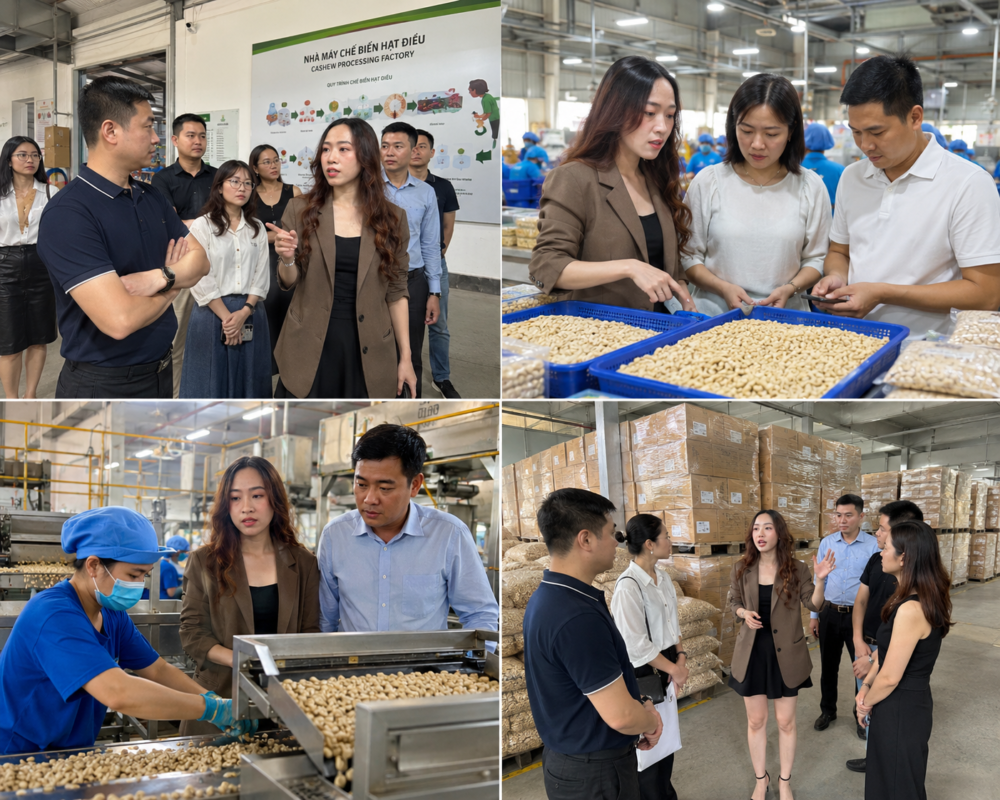
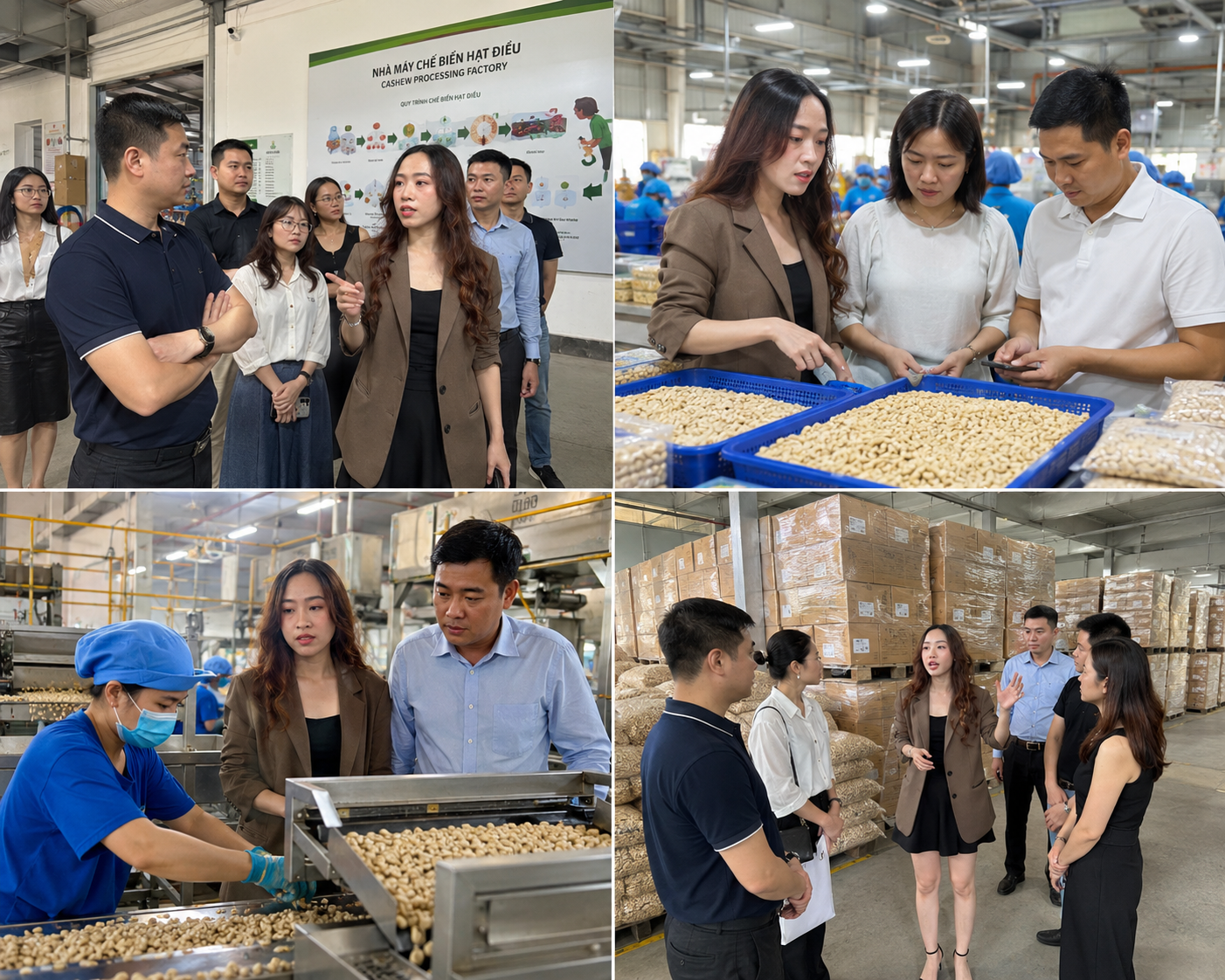
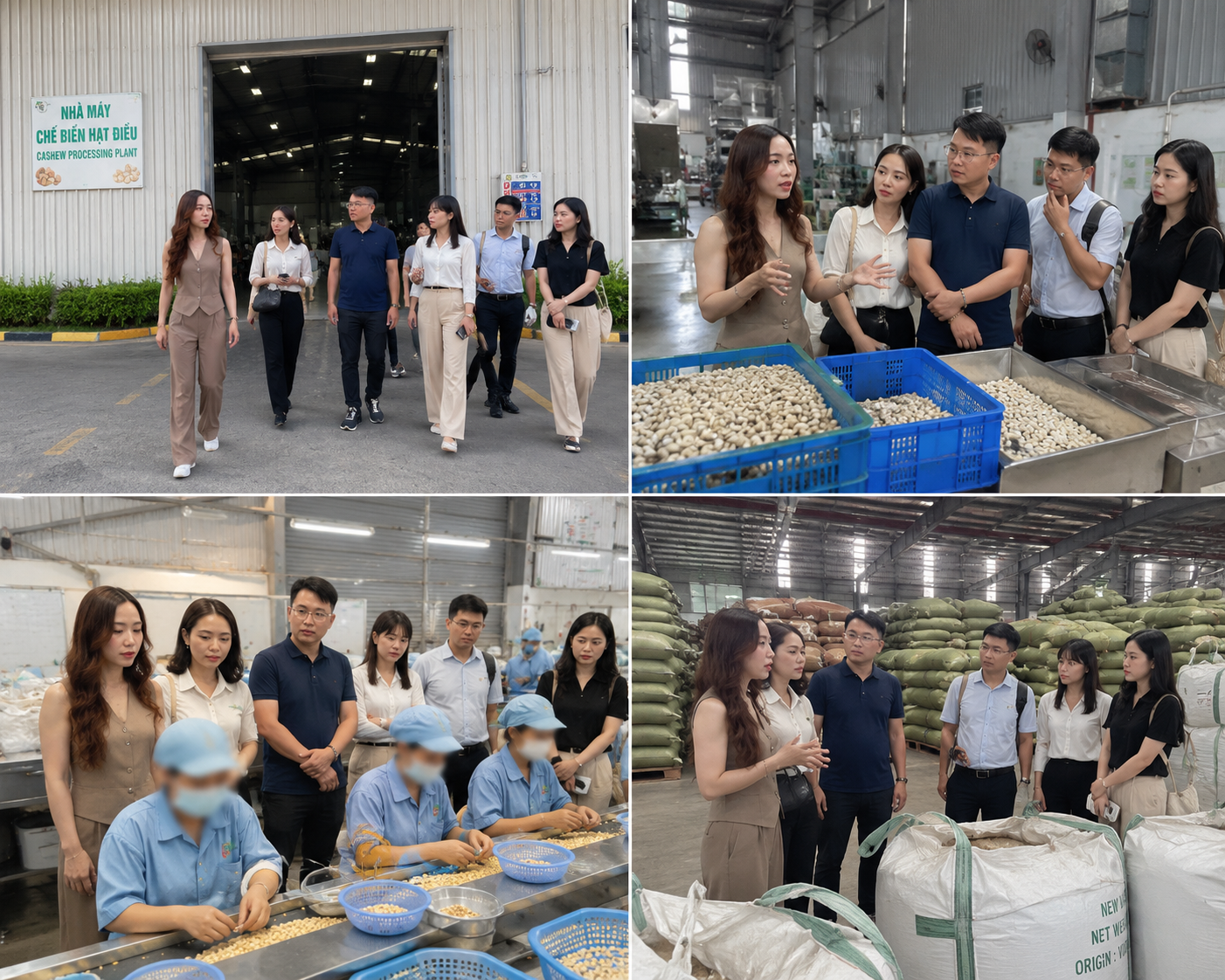
Step 5 — Factory visit or audit: For significant orders or new supplier relationships, a factory visit or facility audit is a recommended step. This allows you or your representative to verify production capacity, processing conditions, packaging capability, storage, and quality management practices in person. Vietnam Biz Rep supports factory visit coordination as part of our factory audit service.
Common Issues Buyers Face with Vietnam Cashew Exporters
Buyers who have sourced from Vietnam without adequate verification often report several recurring issues. Being aware of these problems helps buyers build appropriate safeguards into their sourcing process.
Supplier identity misrepresentation is among the most common issues—a company presents itself as a direct manufacturer when it is actually a trading intermediary. This affects pricing transparency, supply chain traceability, and the buyer’s ability to conduct meaningful factory audits. Inconsistency between sample and bulk shipment quality is another frequent concern, particularly for grade, moisture, and broken ratio. Document gaps at the destination port—missing certificates, incorrect labeling, or non-conforming certificates of origin—cause delays and regulatory complications. These issues are significantly reduced when buyers use local verification and pre-shipment inspection support.
How Vietnam Biz Rep Supports Buyers Working with Cashew Exporters
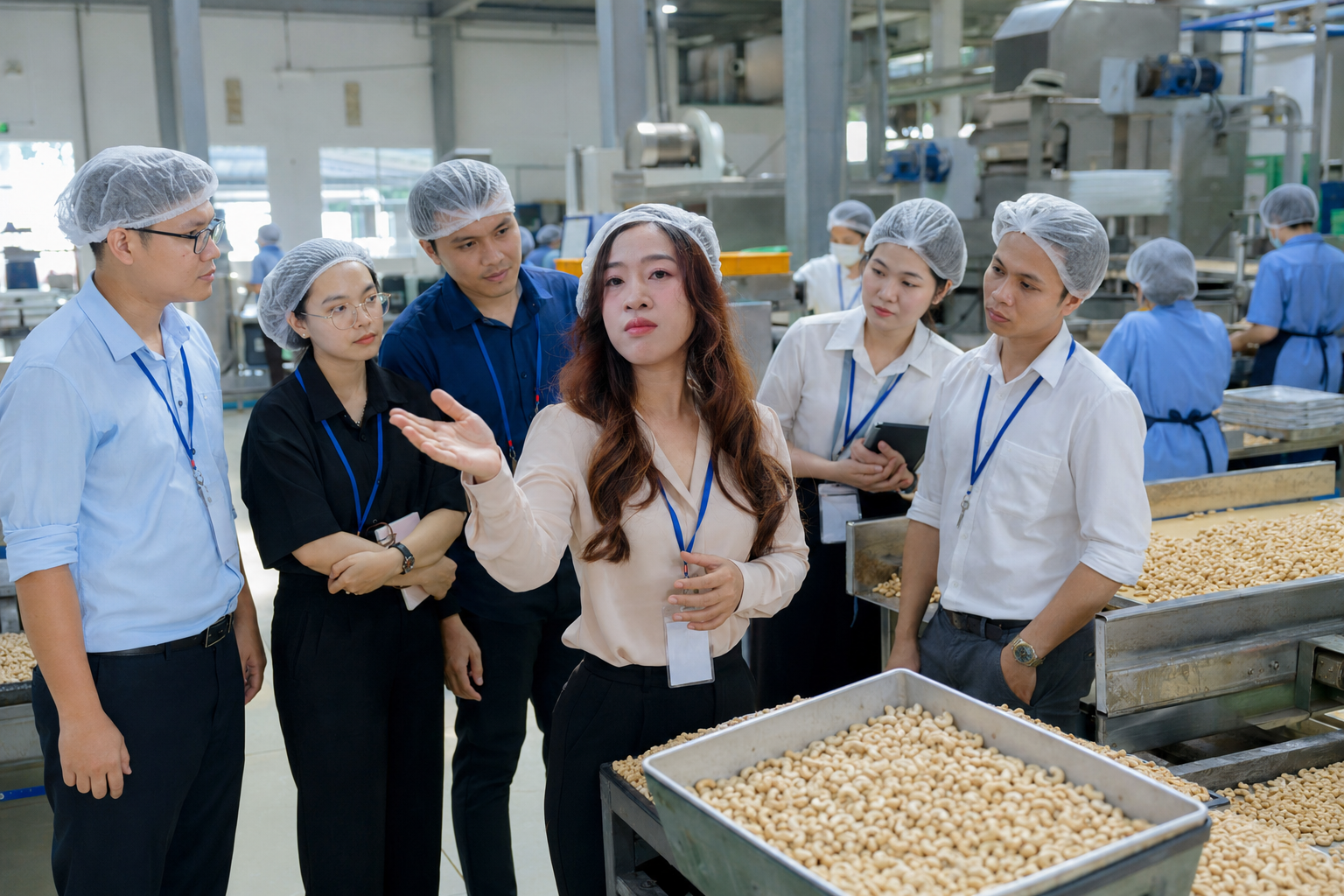
Vietnam Biz Rep provides independent buyer-side support for overseas buyers sourcing from Vietnam cashew exporters. Our services include supplier identification, verification, factory visit coordination, sample management, pre-shipment inspection support, and document review. We act as the buyer’s local representative throughout the sourcing process.
We do not export cashews, represent any exporter, or receive commissions from suppliers. Our sole function is to represent the buyer’s interests in Vietnam. This independence is the foundation of our value proposition—buyers can trust that our recommendations and findings reflect what we actually observed and verified, without supplier-side influence.
For buyers sourcing cashew kernels, our support begins with identifying exporters that match the buyer’s product specification and capability requirements. For buyers sourcing roasted or private label products, we extend support to packaging review, label approval, and production follow-up. Learn more about our approach on the Vietnam cashew nut suppliers page, or explore our supplier verification service for a detailed overview of the verification process. For ongoing sourcing representation, our Vietnam sourcing agent service provides comprehensive buyer-side support.
Frequently Asked Questions
How do I know if a Vietnam cashew exporter is legitimate?
Verification steps include checking business registration (enterprise code) through Vietnam’s national business registry, confirming export license status, visiting the physical factory address, reviewing export history and reference buyers, and assessing documentation capability. Vietnam Biz Rep can support these verification steps as a local representative.
Is it safer to source from a direct processor or a trading company?
Both can be appropriate depending on the buyer’s volume and requirements. Direct processors offer supply chain transparency and the ability to conduct meaningful factory audits. Trading companies may be more flexible for smaller volumes or mixed product requirements. The key is to know which type you are dealing with and to verify accordingly.
Can Vietnam Biz Rep identify exporters for specific cashew grades?
Yes. When buyers provide a clear product specification including grade, packaging, and destination market, we can identify and shortlist exporters with relevant capabilities, subject to availability and the findings from our verification process.
What documents should a Vietnam cashew exporter be able to provide?
Standard export documentation typically includes a commercial invoice, packing list, bill of lading, certificate of origin, phytosanitary certificate, and quality certificate. Additional documents such as food safety certificates, lab test reports, or market-specific compliance documents may be required depending on the destination. Buyers should confirm requirements with their importer and customs broker.
Ready to source from verified Vietnam cashew exporters? Contact Vietnam Biz Rep to discuss your product requirements and how our local representation can support your sourcing process.
Evaluating Cashew Exporter Capability for Your Specific Order
Not every Vietnam cashew exporter has the capability to serve every type of buyer requirement. Evaluating capability before order placement helps buyers avoid production delays, quality shortfalls, and document failures that are difficult to resolve once a shipment is in transit.
Key capability areas to evaluate include processing capacity and lead time (particularly for seasonal products or large orders), packaging capability (bulk vacuum bags, retail pouches, carton configurations), labeling and marking capabilities for the buyer’s destination market, quality management systems including internal testing, sampling procedures, and traceability, and documentation systems for producing accurate and complete export paperwork. For buyers who need private label products, additional capability review of artwork handling, packaging material sourcing, and sample approval processes is required.
Vietnam Biz Rep can conduct capability assessments as part of a factory visit or audit engagement. Our assessment findings are reported directly to the buyer and form a key input into the sourcing decision. We also support buyers in framing the right questions to ask during initial supplier contact, reducing the time spent on suppliers who do not have the required capabilities. For quality-related support during production and at the shipment stage, our Vietnam quality control service provides additional coverage.