


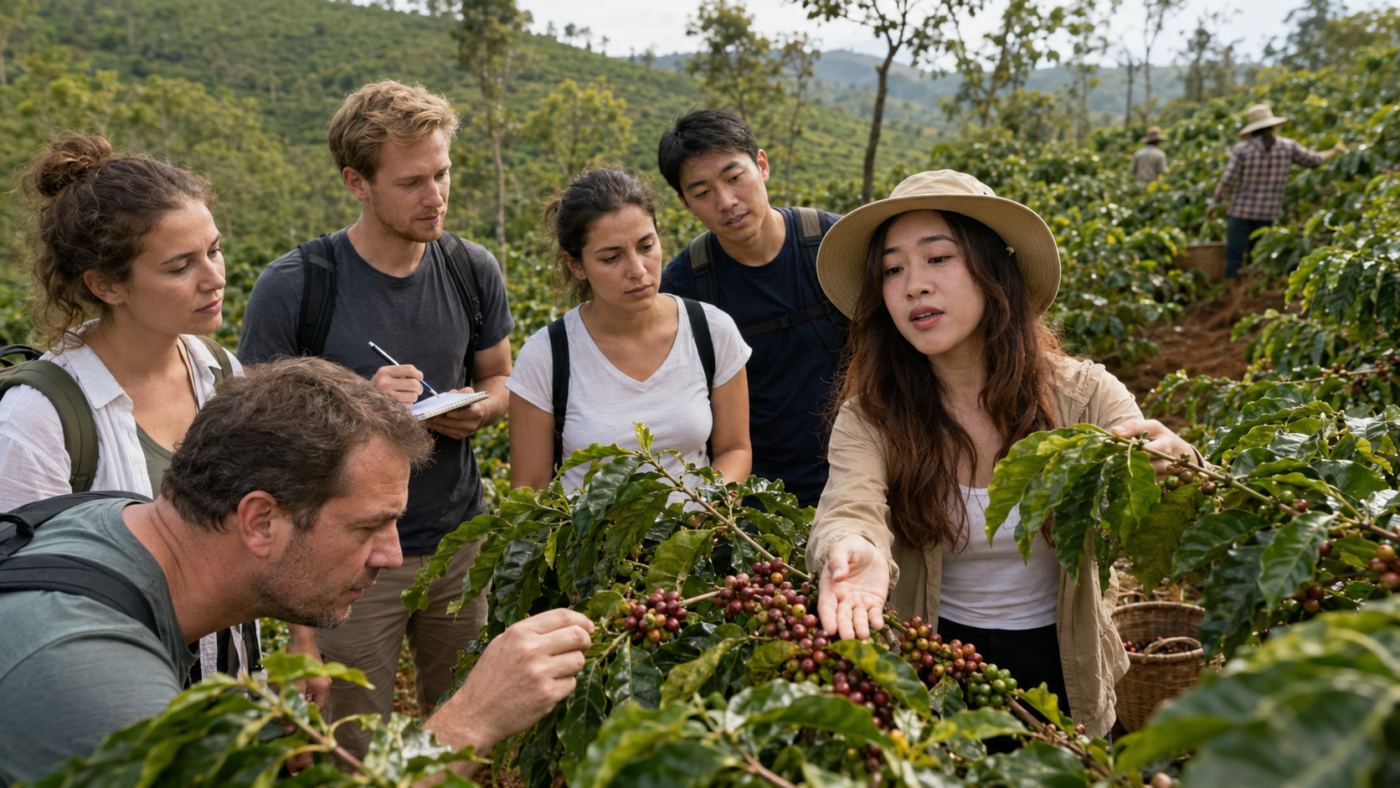
Vietnam is not the first country buyers associate with Arabica coffee, but the country produces a meaningful and growing volume of Coffea arabica — concentrated in specific highland regions that offer the altitude and climate conditions the variety requires. For overseas buyers exploring Vietnam Arabica coffee suppliers, this guide explains where Vietnamese Arabica is grown, what distinguishes it from Vietnamese Robusta sourcing, how to evaluate suppliers, and how to approach the verification process with accurate expectations.
Vietnamese Arabica Coffee: Production Regions and Context
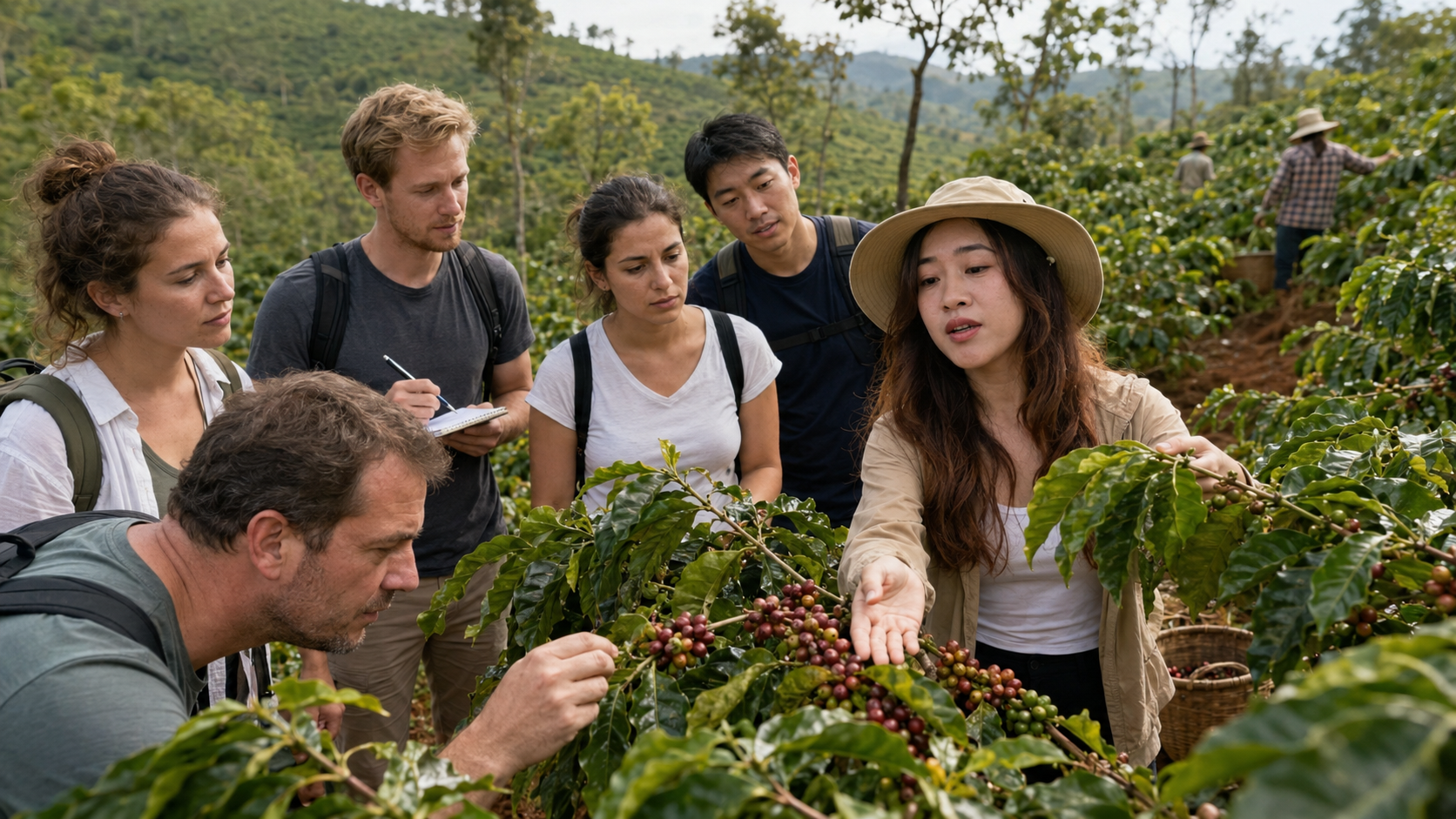
Arabica production in Vietnam is significantly smaller in volume than Robusta and is geographically distinct. The primary Arabica-growing regions include Lam Dong province — particularly the Da Lat plateau, which sits at elevation — and northern provinces such as Son La, Dien Bien, and parts of Lai Chau. These areas provide the cooler temperatures and higher altitudes that Arabica cultivation requires.
The Catimor variety dominates Vietnamese Arabica production due to its disease resistance and adaptability to local growing conditions. Some growers cultivate other varieties, including Bourbon and Typica in smaller quantities in specific microclimates. Buyers seeking specific variety profiles should confirm the cultivar directly with the supplier and, where feasible, request traceability documentation showing the source farm or cooperative.
How Vietnamese Arabica Differs from Robusta in Sourcing Terms
The Vietnamese Arabica supplier pool is smaller and more fragmented than the Robusta supplier network. Fewer large export-scale processors operate in Arabica regions, and more production passes through cooperatives or smaller processors before reaching an exporter. This means buyers may encounter longer lead times, smaller available volumes per supplier, and more variation in quality management standards compared to the established Robusta export market. This is not a reason to avoid Vietnamese Arabica — but it does mean that verification and sample evaluation are even more important before a commercial commitment.
Evaluating Vietnam Arabica Coffee Suppliers
The evaluation criteria for Vietnamese Arabica suppliers follow the same framework as for any coffee supplier, with some specific considerations for the Arabica segment.

Sample Evaluation and Cupping
Sample procurement and cupping evaluation are essential steps in Arabica sourcing — both to assess cup quality and to confirm that the product matches the buyer’s requirements for their specific application. Vietnam Biz Rep can coordinate the procurement of representative samples from shortlisted suppliers and the logistics of shipping them to the buyer’s location for evaluation. Buyers should request samples from multiple production lots rather than a single representative sample to assess consistency.
Processing Method Verification
Vietnamese Arabica is processed using both washed (wet process) and natural (dry process) methods, each producing different flavor profiles. Some specialty-oriented producers also use honey process or other experimental methods. Buyers should confirm which processing method is used for the specific lot being purchased and verify that the processing facilities support the claimed method consistently — not just for specialty-focused marketing samples.
Supplier Legitimacy and Export Capacity
As with Robusta, buyers should verify that the Arabica supplier holds a valid export license, a confirmed business registration, and any claimed certifications. In the Arabica segment, specialty certifications — organic, shade-grown, single-origin documentation — are more commonly marketed but also more frequently misrepresented. Independent verification of these credentials before a commercial contract is essential.

Volume Consistency and Seasonal Availability
Vietnamese Arabica production is seasonal and subject to weather and yield variability. Buyers planning high-volume, year-round sourcing programs should discuss volume commitment expectations with potential suppliers and assess whether their production base — own farms, contracted farms, or cooperative networks — can reliably supply the required volume across multiple seasons. This is a key distinction from Robusta sourcing, where larger suppliers can typically support more consistent year-round volume.
How Vietnam Biz Rep Supports Arabica Sourcing
Vietnam Biz Rep operates as a buyer-side local representative — we do not own coffee farms, operate processing facilities, or export Arabica coffee. Our role is to help overseas buyers access the Vietnamese Arabica supply market more effectively by identifying suitable suppliers, verifying their credentials on the ground, coordinating sample procurement, and supporting pre-shipment quality checks.
For buyers beginning their Vietnamese coffee sourcing research, our Vietnam coffee suppliers overview explains the broader supply landscape. For verification methodology, see our Vietnam supplier verification page. For quality inspection support, see our Vietnam quality control and pre-shipment inspection Vietnam pages. General buyer representation is covered at our Vietnam sourcing agent page.
Building a Sustainable Arabica Sourcing Relationship in Vietnam
The smaller and more fragmented nature of the Vietnamese Arabica supply market means that buyers who identify a reliable, quality-consistent Arabica supplier in Vietnam have a meaningful sourcing advantage worth protecting through a well-managed supplier relationship. Building that relationship requires consistent communication, fair contract terms, and ongoing quality verification — not just at the initial onboarding stage but across multiple production seasons. Buyers who invest in understanding the supplier’s seasonal calendar, production constraints, and quality management practices are better positioned to maintain consistent supply than those who treat Vietnamese Arabica sourcing as a purely transactional, price-driven exercise.
Vietnam Biz Rep supports buyers in establishing and maintaining these supplier relationships as a local buyer representative — following up on production progress, attending periodic quality reviews, and coordinating pre-shipment inspection for each commercial order. For the broader Vietnamese coffee sourcing landscape, see our Vietnam coffee suppliers overview. Supplier verification methodology is detailed on our Vietnam supplier verification page. For ongoing quality control support, see our Vietnam quality control page. Our Vietnam sourcing agent page covers the full range of buyer representation services we offer.
Pre-Shipment Inspection for Vietnamese Arabica
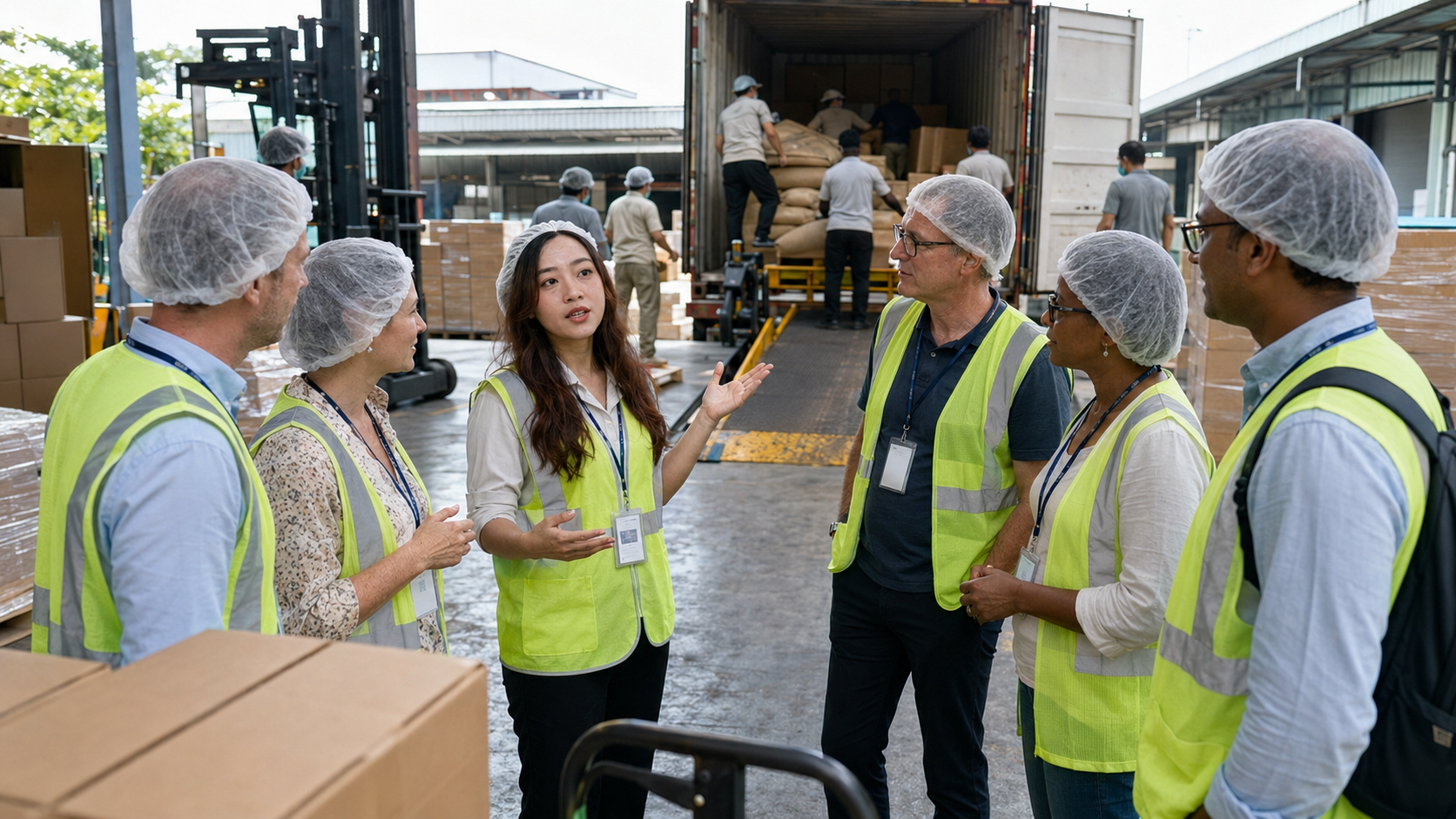
Pre-shipment inspection is important for all coffee sourcing from Vietnam, but carries particular weight in the Arabica segment where quality premiums are higher and the consequences of an off-grade shipment are more significant commercially. An independent inspection before each Arabica shipment is loaded provides the buyer with objective confirmation that the product meets the contracted specification — moisture content, defect count, screen size, and processing consistency. For buyers whose target market or product positioning relies on specific quality claims, having independent inspection documentation for each shipment is also a useful record for commercial and regulatory purposes. Vietnam Biz Rep coordinates pre-shipment inspection for Arabica shipments through accredited inspection bodies active in Vietnam’s highland coffee regions. See our pre-shipment inspection Vietnam page for details on how we coordinate this, and our Vietnam factory audit page for facility-level assessment support.
Documentation and Traceability for Vietnamese Arabica Imports
Buyers sourcing Vietnamese Arabica for specialty or premium retail markets often need more traceability documentation than standard commodity coffee exports provide. This may include lot-level documentation showing the processing date, the processing method, and the origin region; a certificate of analysis from an accredited laboratory; and — where certifications are involved — a copy of the current certification scope from the issuing body showing that it applies to the specific lot being purchased. Assembling this documentation set requires active coordination with the supplier, and errors or gaps in the documentation can create problems at customs or in the buyer’s downstream supply chain. Vietnam Biz Rep can coordinate this documentation assembly on behalf of buyers, liaising with the supplier and relevant authorities to ensure the complete document set is accurate and available before the shipment is loaded.
Frequently Asked Questions
Is Vietnamese Arabica coffee used in specialty or commercial markets?
Both. Some Vietnamese Arabica — particularly from Da Lat and from growers using washed process — is marketed in specialty coffee channels and cupped at scores relevant to specialty buyers. However, the majority of Vietnamese Arabica production enters the commercial market for use in blends. Buyers should specify their quality tier clearly and evaluate samples against their actual target use.
How does Vietnamese Arabica compare in price to other origin Arabicas?
Vietnamese Arabica is generally priced at a discount relative to Arabica from established specialty origins such as Ethiopia, Colombia, or Guatemala — reflecting both quality profile differences and the country’s Robusta-dominated market positioning. Buyers should evaluate the price-to-quality relationship for their specific application rather than comparing directly to specialty origin benchmarks.
Can I source certified organic Arabica from Vietnam?
Some Vietnamese Arabica producers hold organic certification, but the certified supply pool is limited. Buyers seeking certified organic Arabica should be prepared for smaller available volumes and potentially higher prices per kilogram. Any claimed organic certification should be independently verified before relying on it for commercial or marketing purposes.
What is the main Arabica harvest period in Vietnam?
Arabica harvest in Vietnam’s Central Highlands typically runs from November through January, with some regional variation. Northern provinces may have slightly different timing. Buyers planning specific seasonal procurement should confirm harvest timing with the supplier and discuss inventory availability for off-season delivery if required.
Can Vietnam Biz Rep coordinate a visit to an Arabica coffee farm or cooperative?
Yes. We can coordinate sourcing visits to Arabica growing regions in Vietnam — including the Da Lat plateau and northern highland areas — as part of a supplier evaluation trip or farm-level transparency initiative. Travel logistics and scheduling are factored into the scope we agree with the buyer before the visit.
Start Your Vietnam Arabica Coffee Sourcing
If you are evaluating Vietnamese Arabica coffee suppliers for an import program, private label, or specialty sourcing initiative, Vietnam Biz Rep can provide local buyer-side support throughout the process. Contact us to discuss your sourcing requirements and how we can help identify and verify the right suppliers for your needs.
Contact Vietnam Biz Rep for Arabica coffee sourcing support →
