


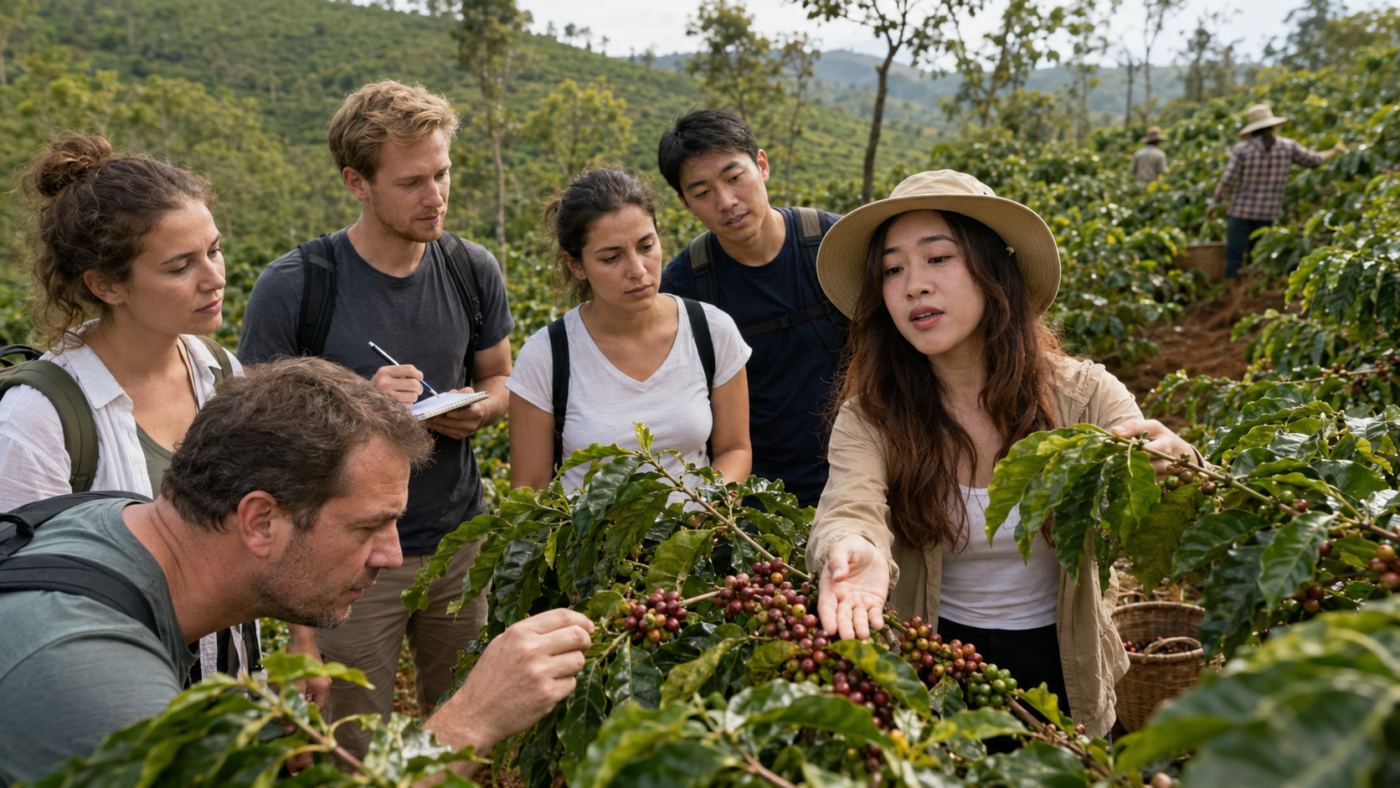
Understanding the vietnam coffee harvest season helps overseas buyers plan their sourcing activities more effectively — timing supplier searches, sample requests, contract negotiations, and shipment planning around the rhythms of the Vietnamese coffee production cycle. This page explains the general seasonal patterns for Robusta and Arabica in Vietnam, with the important caveat that exact timing varies by region and can shift from year to year depending on weather and growing conditions. Buyers should use this as a general planning reference and confirm current season conditions with suppliers or a local representative before making time-sensitive sourcing decisions.
General Robusta Harvest Timing in Vietnam
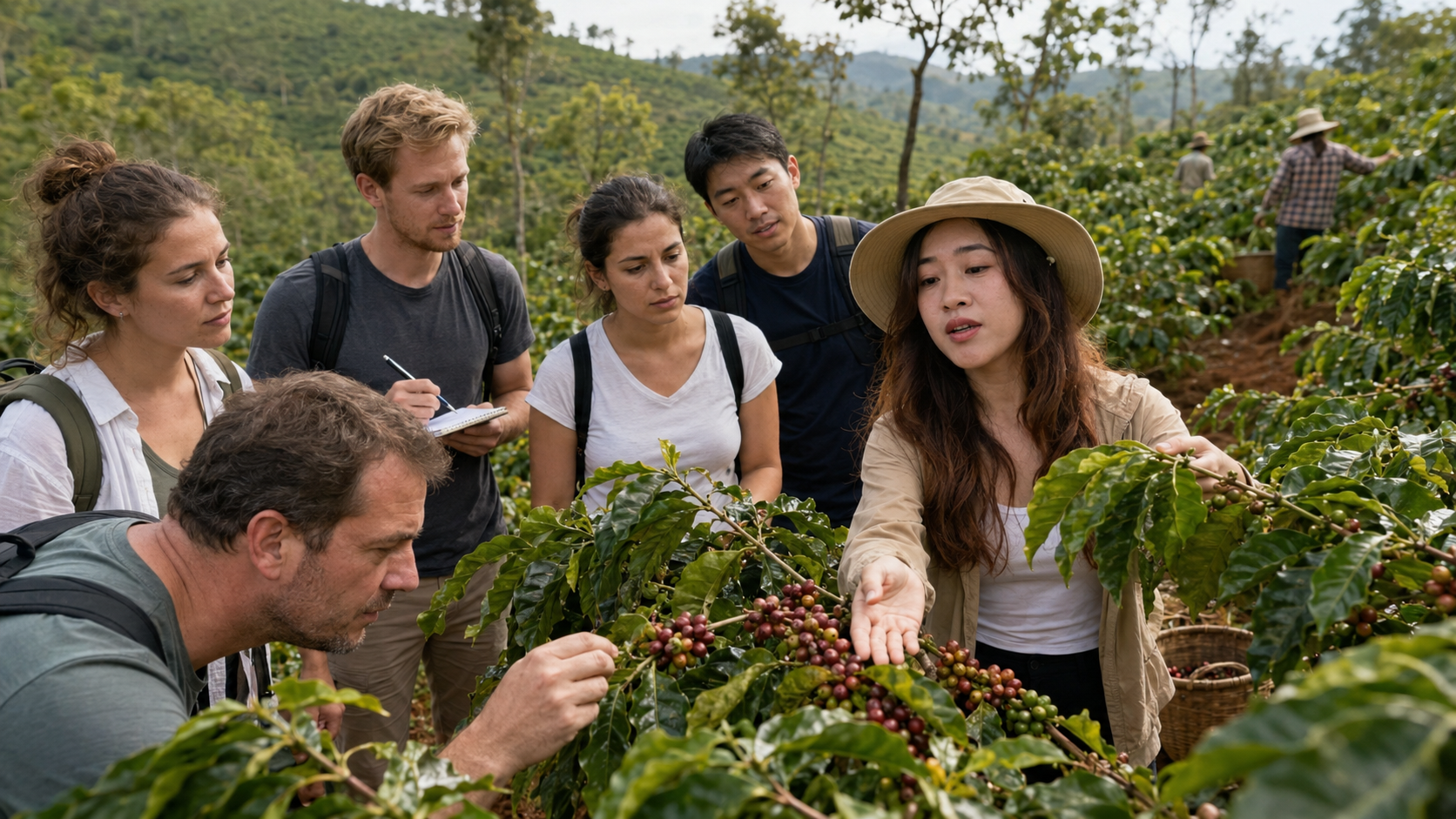
Vietnamese Robusta coffee is grown primarily in the Central Highlands — particularly in provinces such as Dak Lak, Dak Nong, Lam Dong, and Gia Lai — at elevations that support the crop’s production cycle. The Robusta harvest in these regions typically takes place between approximately October and January, with peak activity occurring around November and December in most years. This is a general pattern and can vary by specific location, altitude, and seasonal conditions in any given year.
After harvest, Robusta beans go through processing — wet-hulling, drying, and milling — before they are graded and packed for export. The time from harvest to export-ready green beans varies depending on the processing method and the scale of the processor’s operations, but green bean exports typically ramp up in the period following the main harvest — roughly January through May — and continue through the year as stored lots are drawn down.
Buyers who want fresh-crop Robusta — coffee from the most recent harvest — should time their sourcing accordingly. Buyers who source mid-year or late in the crop year may be purchasing older crop beans from the previous season, which affects the total age of the product from harvest to delivery. For buyers where crop-year freshness is an important specification element, communicating this clearly to the supplier and confirming the harvest year of the lot is advisable.
General Arabica Harvest Timing in Vietnam
Vietnamese Arabica is grown in different regions and at higher altitudes than Robusta, which affects its harvest calendar. Arabica grown in Son La province (northern highlands) and Lam Dong province (central highlands) may have somewhat different harvest windows depending on the elevation and local climate. In general, Arabica harvest in Vietnam is understood to occur in roughly the October-to-January period, though the specific timing for a given region or farm can vary.
The Vietnamese Arabica supply chain is less standardised and more varied than the mainstream Robusta market. Buyers sourcing Arabica from Vietnam should work with a local representative or a supplier who has direct knowledge of the specific growing region and can provide timely information about harvest conditions and crop availability. General seasonal patterns for Arabica should be treated as a rough guide; conditions on the ground can differ significantly from one year to the next.
How Harvest Season Affects Buyer Sourcing Planning
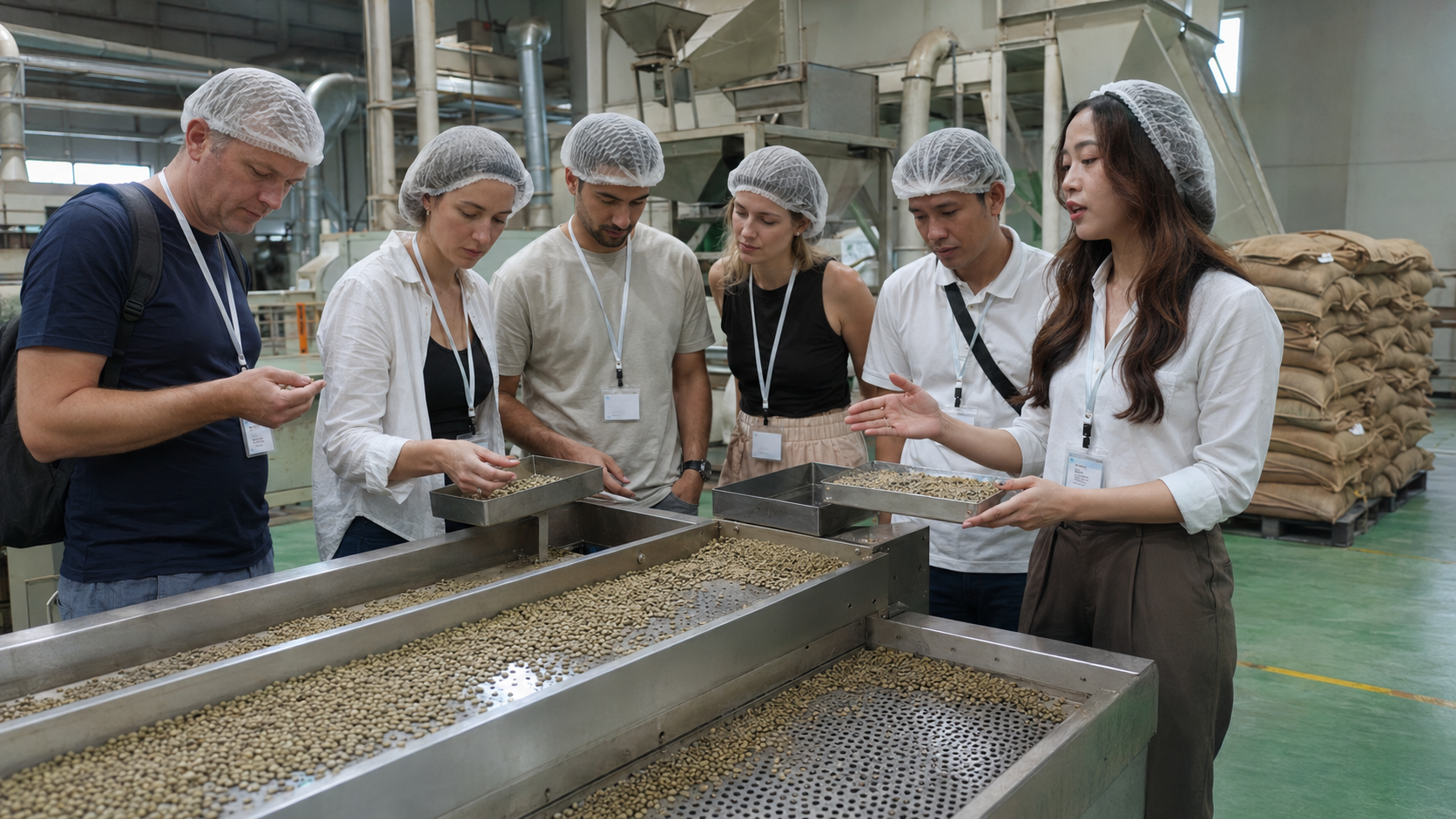
Understanding the harvest season matters for buyers because it affects several aspects of the sourcing timeline. Initiating a supplier search and sample requests before the peak export season — rather than during it — gives buyers more time to conduct due diligence without competing against higher-demand periods. Suppliers who are processing or packing at peak capacity may be slower to respond to new inquiries or to arrange facility visits during the busiest months.
Contract negotiations for forward supply — where a buyer wants to secure a quantity of coffee from the upcoming crop — are typically more productive if they begin before harvest. Discussing specifications, pricing, and delivery timelines with a supplier before the crop is fully processed gives both parties time to align expectations and avoid last-minute complications. Buyers who wait until after harvest to begin negotiations may find that preferred lots have already been committed to other buyers.
For buyers who need consistent year-round supply rather than a single seasonal purchase, understanding the crop year cycle helps in planning contract structure. A supply contract that covers multiple delivery periods across the year needs to account for when new-crop beans will be available, when old-crop inventory transitions, and how pricing may shift at these transition points. Local representation by Vietnam Biz Rep can help buyers stay informed about these seasonal dynamics through ongoing supplier communication.
Seasonality and Supplier Availability
The harvest season also affects which suppliers are most active and available at different times of year. During and immediately after harvest, processors are at their busiest — receiving cherry, processing, drying, and milling. This is a period of high operational activity for the supply chain, and some suppliers may have less capacity to manage new buyer inquiries or to host facility visits.
Conversely, the period before harvest — roughly July to September for Central Highlands Robusta — tends to be a slower period for many suppliers. This can be a productive time for buyers to initiate supplier search, conduct facility visits, and finalise contract terms for the upcoming crop, as suppliers are generally more available and responsive. Vietnam Biz Rep can coordinate facility visits and supplier meetings on behalf of overseas buyers during this pre-harvest window when supplier calendars are less congested.
For buyers working on a supplier verification engagement or coordinating sample evaluation from a prospective supplier, timing the process around the seasonal calendar helps ensure that the samples represent current-crop material and that the supplier has the capacity to give the engagement proper attention. The Vietnam coffee suppliers overview covers the broader supplier landscape and how to identify suitable candidates. The supplier verification and contact pages are useful starting points for initiating a sourcing engagement.

Sample Timing Around the Harvest Season
Sample timing is one of the practical planning decisions that harvest season awareness informs. A sample drawn from a supplier’s stock in August — several months before the next Robusta harvest — may be from the previous crop year. A buyer who evaluates this sample and then places an order expecting new-crop beans from the upcoming harvest needs to communicate this expectation clearly with the supplier and confirm that the bulk order will be from the new crop.
Requesting samples specifically from new-crop material — once processing has begun after harvest — is advisable for buyers who want to evaluate the quality of the current season’s production. This typically means requesting samples from around January onwards for Central Highlands Robusta. Vietnam Biz Rep can coordinate sample requests with suppliers and confirm with the supplier whether the sample being provided is from the current crop year or carried-over stock, so the buyer has accurate information for their evaluation.
Buyers who are conducting coffee sample evaluation for the first time should factor harvest timing into their planning to ensure they are evaluating representative, current-season material. For a broader view of how to structure the sourcing process from supplier search through to trial order, the how to find coffee suppliers in Vietnam guide covers the full sequence. The coffee sourcing agent service provides ongoing local representation and real-time local market awareness throughout the year.

Frequently Asked Questions
Can I buy Vietnamese coffee year-round, or only during the harvest season?
Most Vietnamese coffee is available year-round from exporters and traders who hold inventory from the previous harvest. The harvest season determines when fresh-crop coffee enters the supply chain, but processed and export-ready beans are typically available throughout the year as suppliers draw down stocks. Buyers who specifically want new-crop coffee need to time their orders accordingly; buyers who are less concerned about crop year can purchase at any time from available inventory.
Does harvest timing affect pricing?
Coffee prices in Vietnam, as in other origins, fluctuate with global commodity market conditions, currency movements, and local supply factors — of which harvest volume is one. A particularly large crop may create downward price pressure, while a poor harvest season can push prices up. Buyers sourcing large volumes should monitor market conditions and may find it useful to discuss pricing timing with their suppliers and freight forwarders who are close to the local market.
How far in advance should I plan sourcing activities around the Vietnamese harvest?
For buyers wanting fresh-crop Robusta from the Central Highlands harvest, beginning supplier engagement, sample requests, and contract discussions two to three months before the anticipated main harvest period — typically around August to September — is a reasonable starting point. This allows time for supplier verification, sample evaluation, and contract finalisation before the main export ramp-up. Buyers who start later may face competition for preferred lots and less flexibility in timing.
Does weather affect the timing and quality of the Vietnamese coffee harvest?
Yes. Rainfall during the drying period after harvest can affect green bean quality, and drought or unusual rainfall patterns during the growing season can affect cherry development and yield. Specific weather impacts vary by region and year. Buyers should use this page as a general seasonal reference and confirm current conditions with their supplier or Vietnam Biz Rep’s local team when making time-sensitive sourcing decisions.
To discuss sourcing planning for the upcoming Vietnamese coffee harvest season, contact Vietnam Biz Rep with details about your product requirements and timeline.
