

When overseas buyers begin sourcing coffee from Vietnam, one of the most common early questions is about minimum order quantities. Understanding coffee MOQ in Vietnam helps buyers set realistic expectations, structure their conversations with suppliers more effectively, and avoid the confusion that arises when a buyer’s trial volume is far below what a supplier normally handles. This page explains why MOQ varies so significantly across the Vietnamese coffee supply chain and what factors drive it — without fabricating specific numbers, since actual minimums depend on the supplier, product type, and negotiation.

Why Coffee MOQ Is Not Uniform Across the Market
Minimum order quantities in the Vietnamese coffee market vary widely because the supply chain includes different types of businesses at different operational scales. A large exporter who processes hundreds or thousands of metric tons per year has different operational constraints than a small processor handling a few tons from a highland cooperative. MOQ reflects the supplier’s minimum viable production run, minimum economic shipment unit, or minimum threshold for a transaction to make business sense for them.
MOQ is also product-specific. A supplier who handles bulk green beans may require a minimum of one full container load (20 or 40 feet) for standard green bean exports — because the economics of small-quantity sea freight rarely justify the logistics cost. The same supplier may be willing to sell smaller quantities for air freight samples, or for local delivery within Vietnam to a buyer’s freight consolidator. Roasted coffee in retail packaging may have different MOQ from green beans, and private label products — where custom packaging must be produced — typically have higher MOQs than standard commodity lots.
Buyers should not treat any single MOQ figure they encounter as representative of the market overall. The only reliable way to understand what a specific supplier’s MOQ is for a specific product is to ask, and to have a clear conversation about what volume the buyer actually needs at the trial and ongoing stages.
MOQ Drivers: Product Type
Green coffee beans are typically traded in bag quantities, with standard commercial export bags around 60 kg for jute-bagged beans. The minimum meaningful shipment for sea freight is often a partial or full container. Trial quantities may be possible in smaller lots, but logistics cost per kilogram increases significantly at smaller volumes. Buyers considering very small trial quantities (less than one metric ton) should discuss air freight options with suppliers or work with a freight consolidator to combine their trial lot with other shipments.
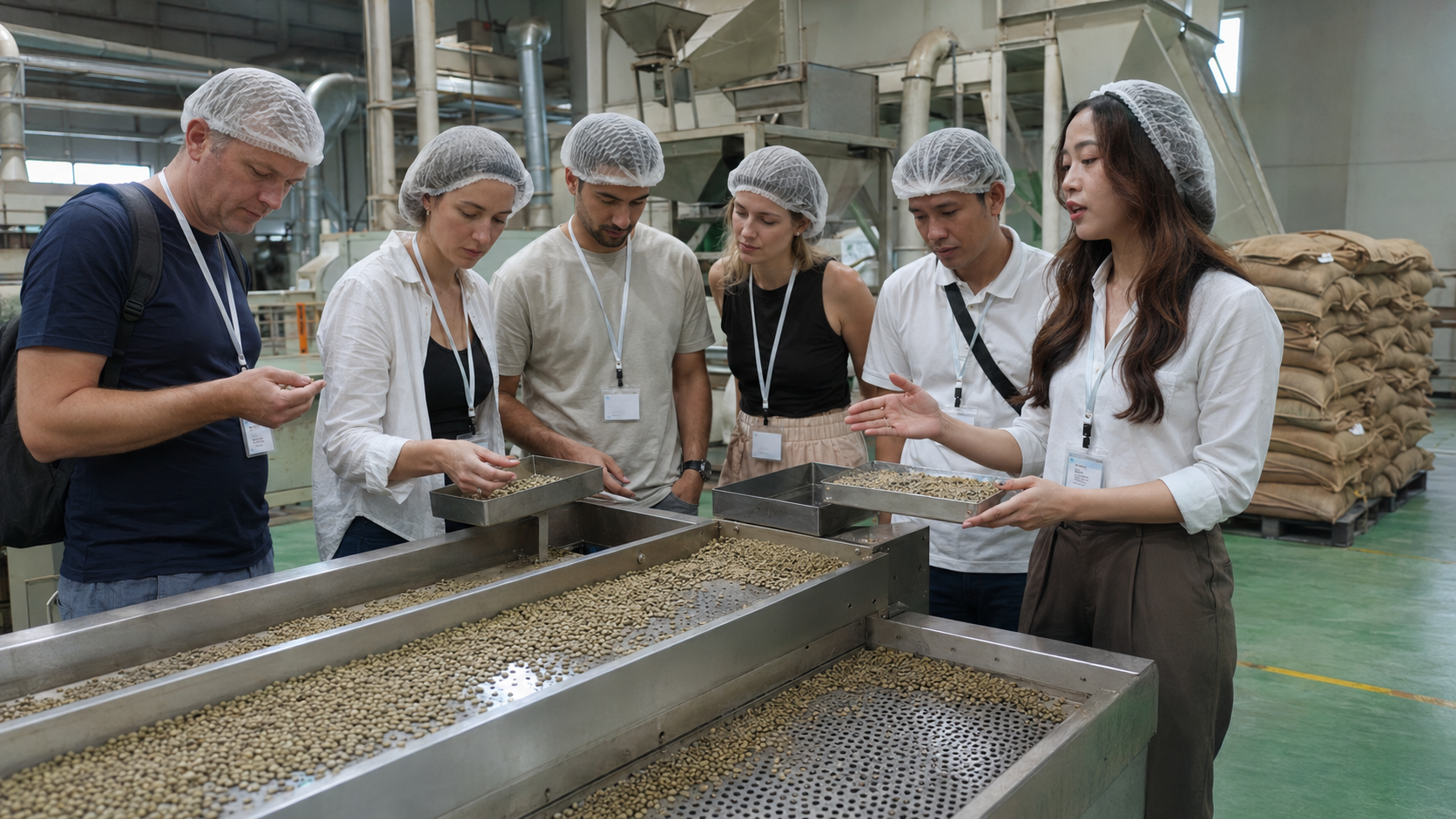
Roasted coffee in retail packaging has different MOQ dynamics. If the supplier already has a standard packaging SKU in their own brand or in generic packaging, a buyer may be able to purchase smaller quantities. If the buyer requires custom packaging — different bag size, custom print, or specific label — the supplier needs to produce or procure packaging materials in quantity before production begins, which typically pushes the MOQ up to justify the setup cost.
Instant coffee and private label products generally have the highest MOQs because they involve specialised production runs and often custom formulation or packaging. Buyers entering these product categories should expect to discuss MOQ as part of a detailed product development conversation with the supplier, not as a simple price list item.
MOQ Drivers: Processing and Customisation
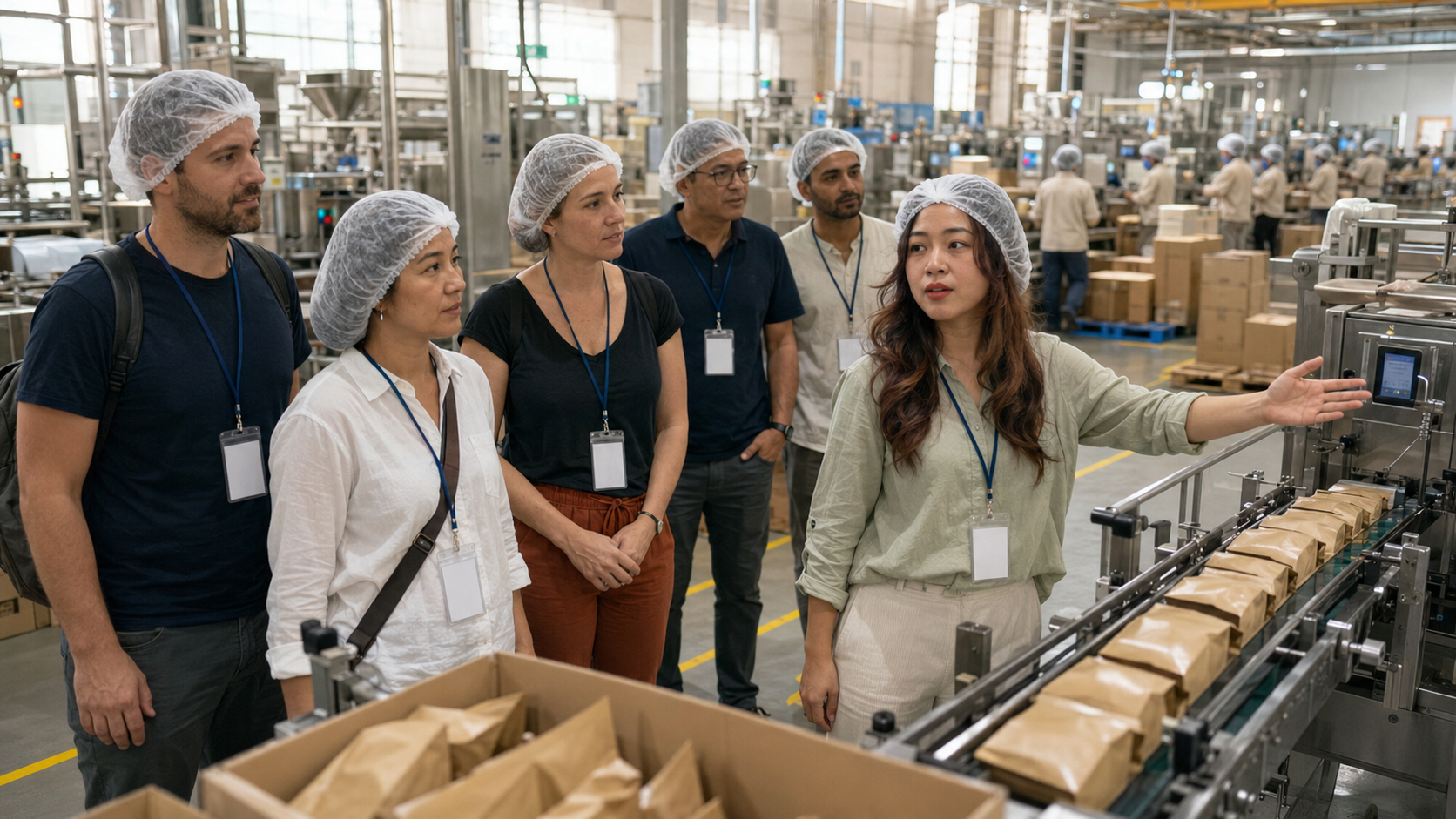
Suppliers who undertake additional processing steps for a specific buyer — such as custom sorting to a buyer-specified screen size, wet processing to a specific profile, or roasting to a defined roast level — typically require a higher MOQ than for a standard commodity lot. The additional processing step creates setup and coordination costs that need to be spread across a minimum volume to be economical for the supplier.
Packaging customisation is one of the most common MOQ-driving factors in roasted and processed coffee. Ordering a small quantity in custom-printed packaging is rarely practical, because the packaging material itself must be produced or purchased in a minimum print run. Buyers who are not ready to commit to the volume needed for custom packaging have the option of purchasing in plain or generic packaging for the trial phase, then moving to custom packaging once the volume justifies it.
Buyers should discuss customisation requirements and their MOQ implications explicitly with suppliers before finalising the purchase specification. Vietnam Biz Rep can facilitate these conversations in Vietnamese, ensuring that the supplier’s actual production constraints are understood rather than misrepresented or left unclear due to communication barriers. The coffee sourcing agent service covers this type of ongoing supplier communication.
Negotiating MOQ with Vietnamese Suppliers
MOQ is often a starting point for negotiation rather than a fixed, non-negotiable floor. Suppliers may be willing to accommodate smaller quantities at a higher per-unit price, or in exchange for a commitment to larger repeat orders. For buyers who are evaluating a new supplier for the first time, framing the trial order as the first step in an ongoing relationship — rather than a one-off purchase — can help a supplier see value in accommodating a smaller initial quantity.
Buyers should approach MOQ discussions with realistic expectations and honest communication about their actual volume potential. Overstating expected volume to get a better trial price creates problems when the buyer’s actual orders do not match the implied commitment. Suppliers who have been given accurate volume information can make more informed decisions about whether to accommodate a smaller trial, and the relationship starts on a more reliable footing.
For context on the full sourcing process from initial supplier search through to placing a trial order, the how to find coffee suppliers in Vietnam guide is a useful starting point. The supplier verification process helps buyers confirm that the supplier is legitimate and capable before committing to an order of any size. For buyers sourcing specific product types — such as private label — the Vietnam private label coffee manufacturers page covers MOQ dynamics specific to that segment. The Vietnam coffee suppliers overview and Vietnam sourcing agent pages provide broader context on the sourcing landscape and local representation options.
MOQ Drivers: Logistics and Shipment Format
The logistics format of a coffee shipment has a direct bearing on the practical minimum order. Ocean freight works most economically in full container loads (FCL) — either 20-foot or 40-foot containers — where the per-unit freight cost is minimised. Less-than-container-load (LCL) shipments are possible for smaller quantities, but LCL carries higher per-kilogram freight costs, longer transit times due to consolidation and deconsolidation, and increased risk of cargo damage or contamination from other goods in the same container.
For buyers who are genuinely testing a new product at small quantities, airfreight is an alternative for smaller sample or trial lots — typically under 100 kg. Airfreight is significantly more expensive per kilogram than ocean freight, but may be justified for high-value specialty products, urgent samples, or very small trials where the goal is product evaluation rather than commercial resupply.
Buyers should discuss logistics format with their freight forwarder alongside the supplier conversation. Understanding the economics of different shipment sizes helps buyers set realistic expectations for trial order volume and freight cost, and gives them a better basis for discussing MOQ with the supplier in the context of actual landed cost. For buyers who need local support in coordinating logistics communication with Vietnamese suppliers, the Vietnam sourcing agent service is available. The Vietnam coffee export documents guide covers the documentation relevant to each shipment size and format.
Frequently Asked Questions
Is there a standard MOQ for green coffee beans from Vietnam?
No. MOQ for green coffee from Vietnam varies by supplier, product type, and logistics arrangement. For ocean freight shipments of standard green beans, full container loads (FCL) of 20 or 40 feet are common commercial units, but suppliers may accommodate smaller quantities at different pricing. Air freight and courier options allow very small trial quantities that would not be economical for sea freight. The right starting point is to ask your specific supplier directly.
Can I negotiate a lower MOQ for a first trial order?
Often yes, particularly if you are transparent about your intentions — that this is a trial order with the expectation of larger follow-on orders if the product and relationship meet your expectations. Some suppliers have standard trial order policies; others will negotiate on a case-by-case basis. Being honest about your current volume needs and your longer-term plans gives the supplier the information they need to make a reasonable commercial decision.
Why is MOQ higher for private label and custom packaging?
Custom packaging requires producing or procuring packaging materials in a minimum print run — bags, labels, cartons — before production can begin. The economics of a small-quantity print run are rarely viable, so the MOQ for custom packaging is typically set at the minimum volume needed to justify the packaging production cost. Buyers who are not yet ready for custom packaging volumes can start with plain or generic packaging for the trial phase.
Does Vietnam Biz Rep help negotiate MOQ with suppliers?
Vietnam Biz Rep can facilitate conversations about MOQ and order terms with Vietnamese suppliers on behalf of overseas buyers, communicating in Vietnamese to ensure supplier responses are accurately understood. Vietnam Biz Rep does not negotiate on the buyer’s behalf in the sense of committing to terms — the final commercial decision remains with the buyer — but can ensure that the discussion is clear and that both parties understand each other’s position accurately.
To discuss your coffee sourcing requirements and volume needs with Vietnam Biz Rep, contact us with details about the product type and approximate quantities you are considering.
